

Everest Fire and Rescue
Building a locally led fire and rescue service in the Everest region
From its origins in FIRE AID’s long-term work in Nepal to the development of Everest Fire & Rescue, the project has grown into a locally focused programme building fire, rescue and emergency preparedness capability across the Khumbu.
Since 2023, firefighting training has reached communities across the region, while EFR has continued to develop local leadership, equipment, rescue capability and community preparedness. The next stage is about turning that growing capability into a sustainable service through local instructors, stronger infrastructure and new systems for the region’s most significant risks.
The goal is to build a professional, accountable and community-led fire and rescue service that is developed, led and governed by the people of the Khumbu.
Our impact since 2012
What We're Working On Now
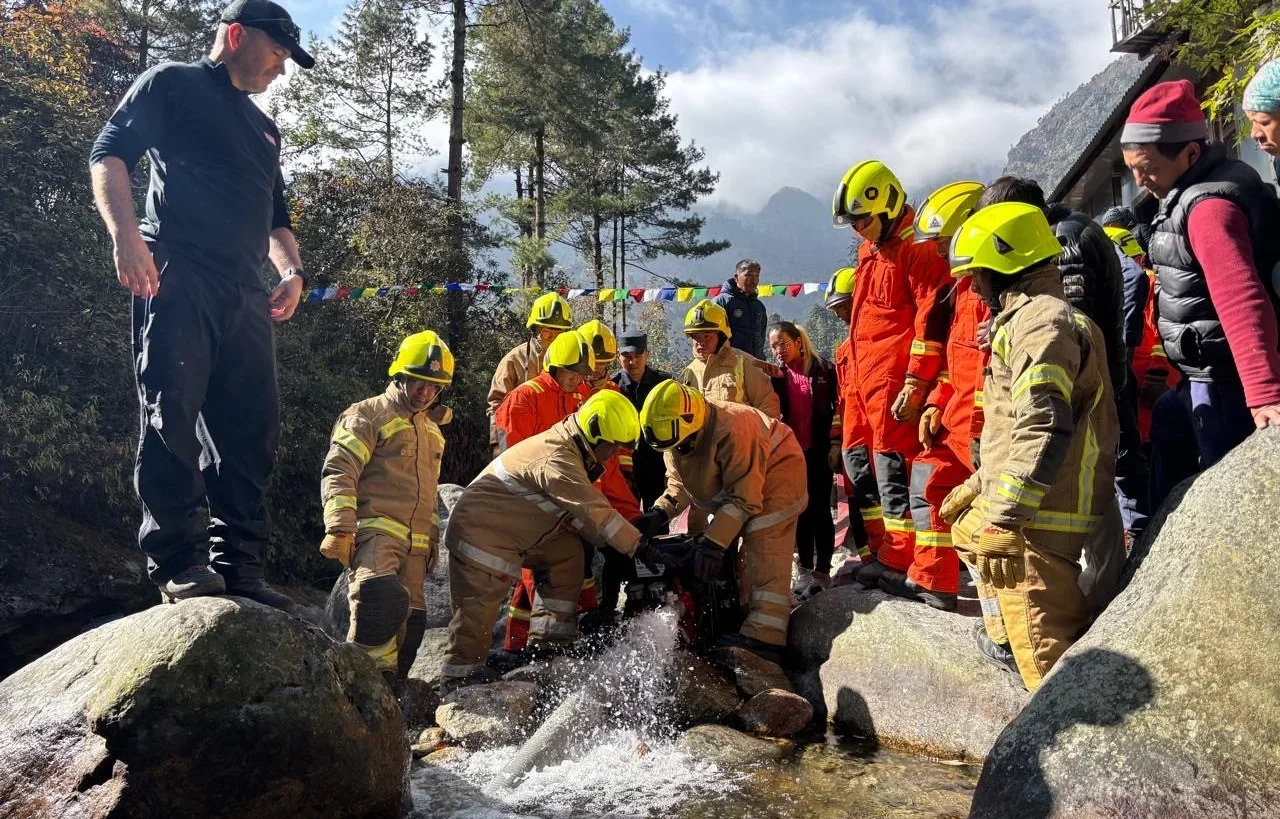
FIRE AID and Everest Fire & Rescue have been developing practical firefighting and emergency response skills across the Khumbu since 2023. Training is delivered with local volunteers and community teams, focusing on the skills they need to respond to fires and other emergencies in the difficult conditions of the Everest region.
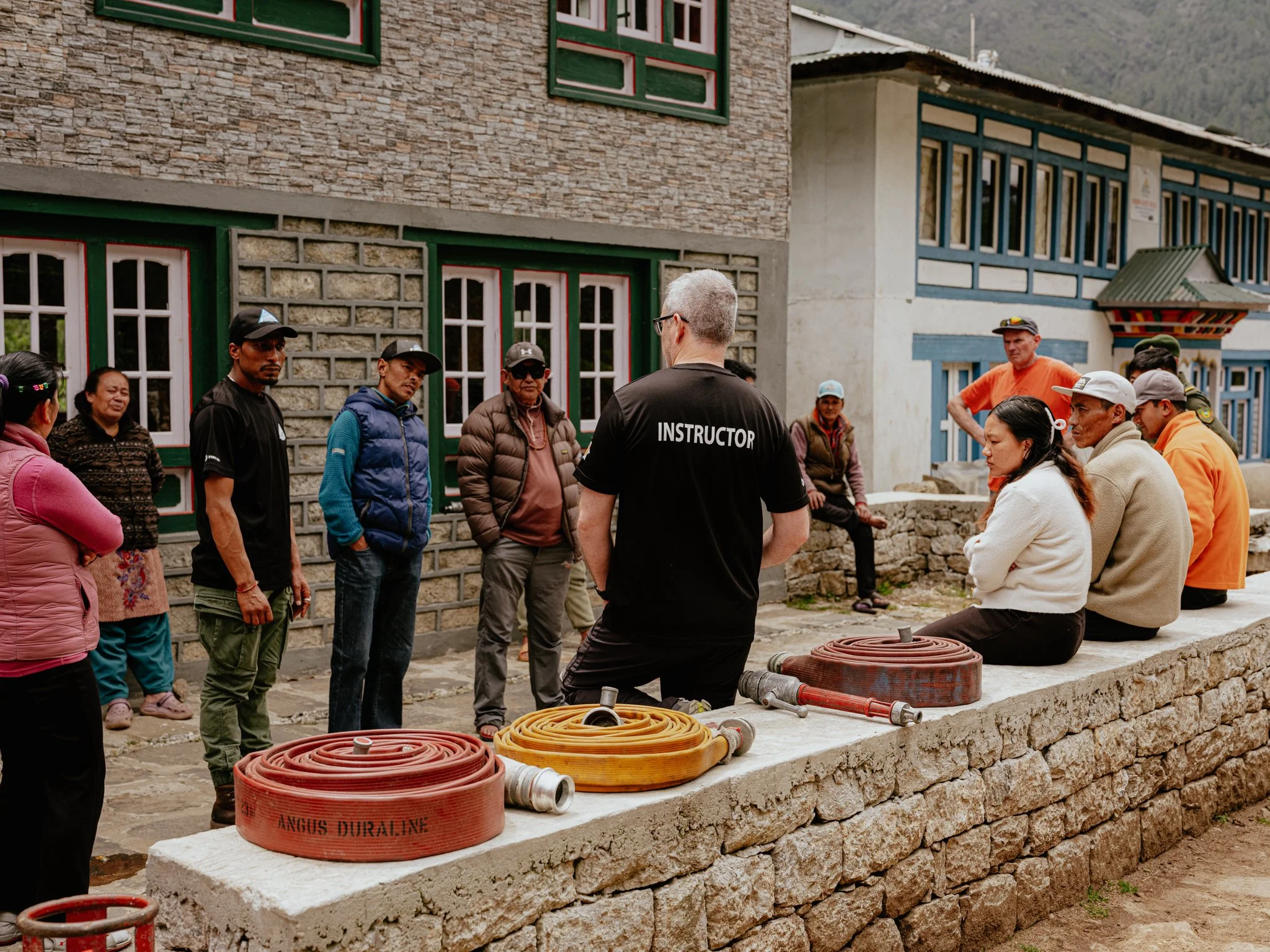
train the trainer
Developing structured training modules and mentoring local instructors and leaders so they can train and develop their own crews. This includes incident command, leadership mentoring and service structuring, helping EFR build the skills, confidence and organisational capability needed to develop its service locally and sustainably.
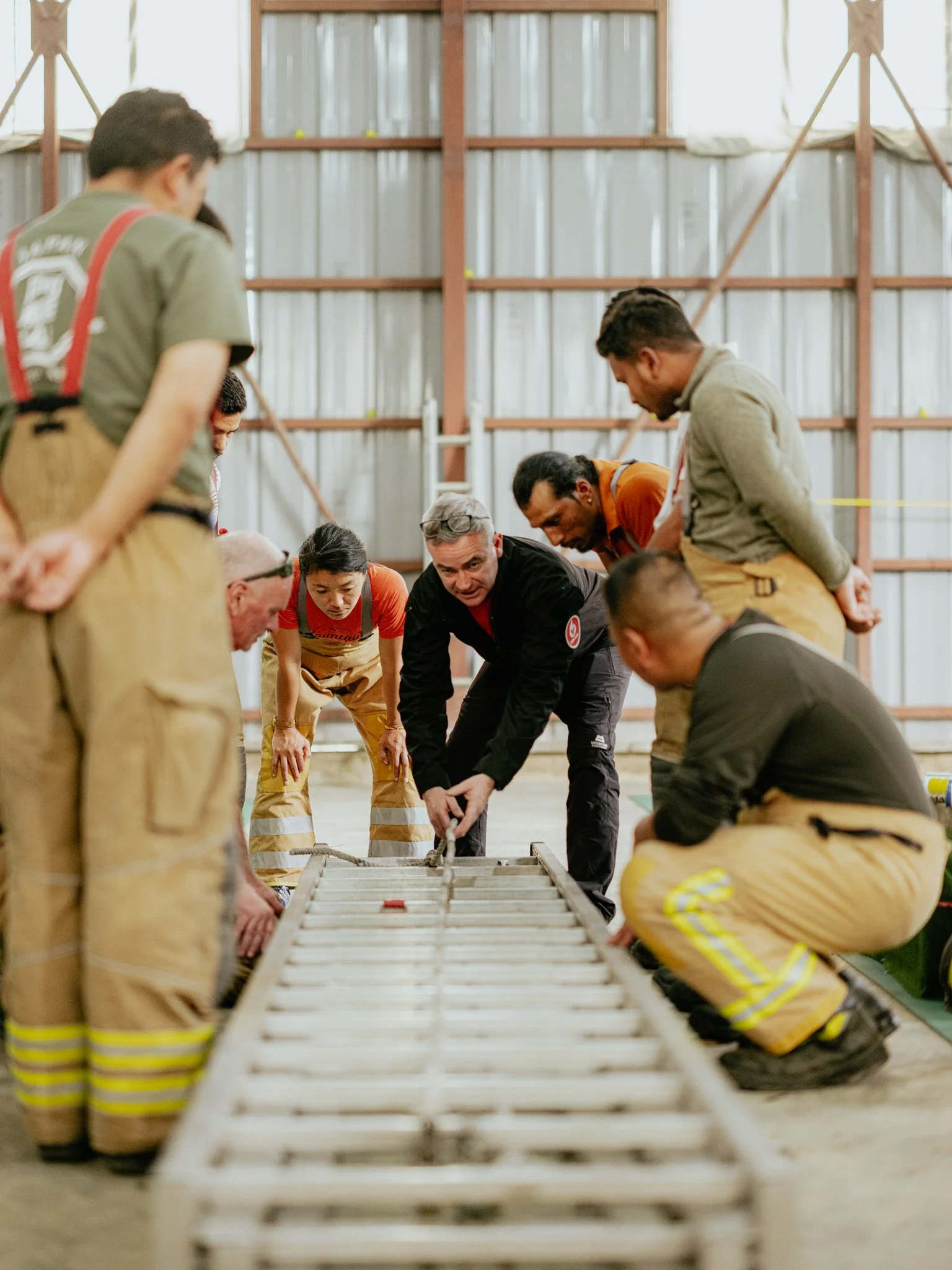
USAR & Technical rescue
Exploring the development of Urban Search and Rescue capability for complex incidents such as building collapse, earthquakes, landslides, avalanches and glacial lake outburst floods, and other emergencies linked to the region’s changing environmental conditions with appropriate training, equipment and operational planning.
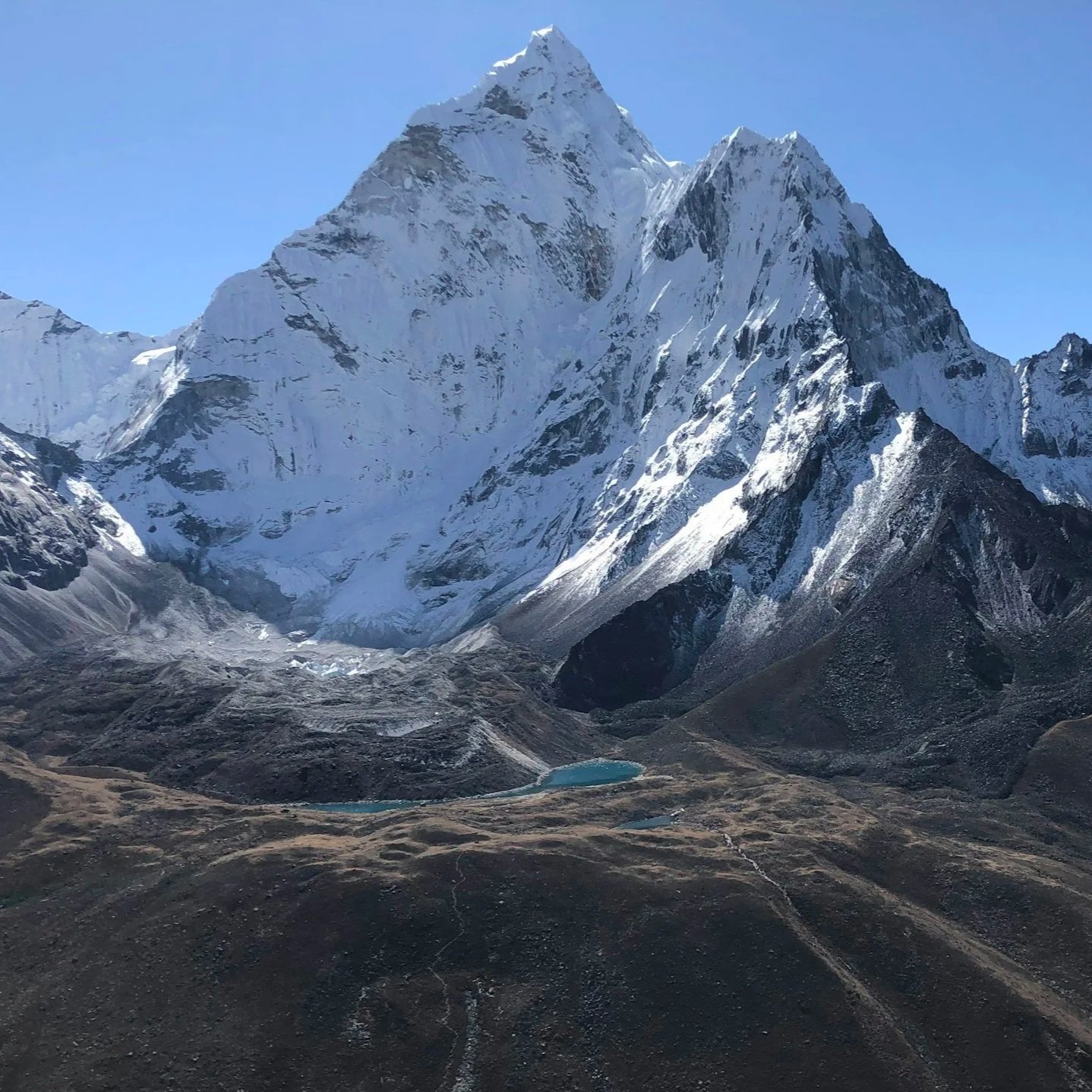
GOlF Preparedness
Developing early warning systems for glacial lake outburst floods, including identifying areas at risk, developing evacuation routes and establishing practical community evacuation protocols.
everest Base Camp & Khumbu Icefall
Developing plans with local government to provide dedicated rescue equipment and establish clearer arrangements for emergency response around Everest Base Camp and the Khumbu Icefall, helping strengthen preparedness for incidents in one of the region’s most challenging environments.
Equipment, Inclusion and Partnerships
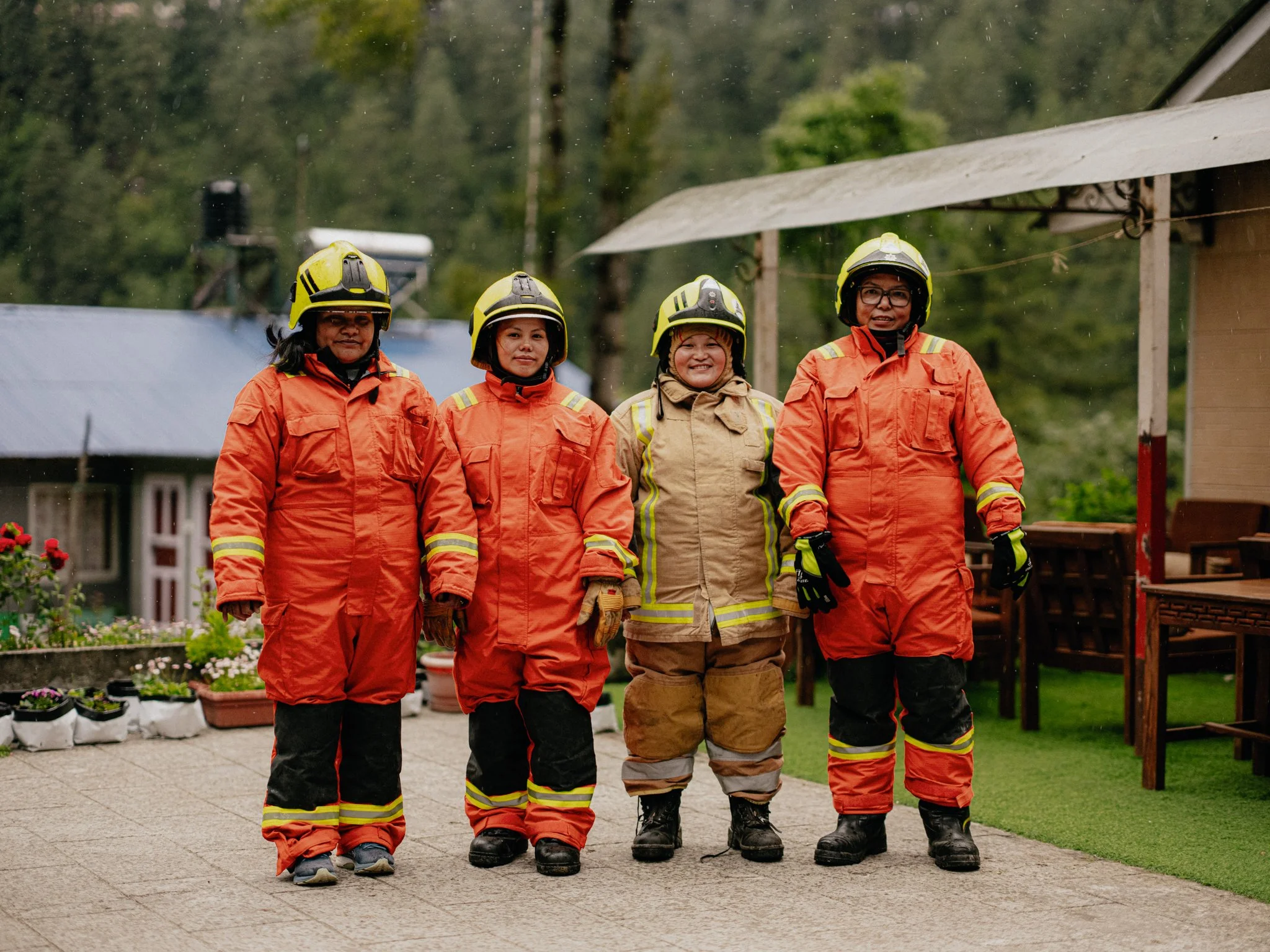
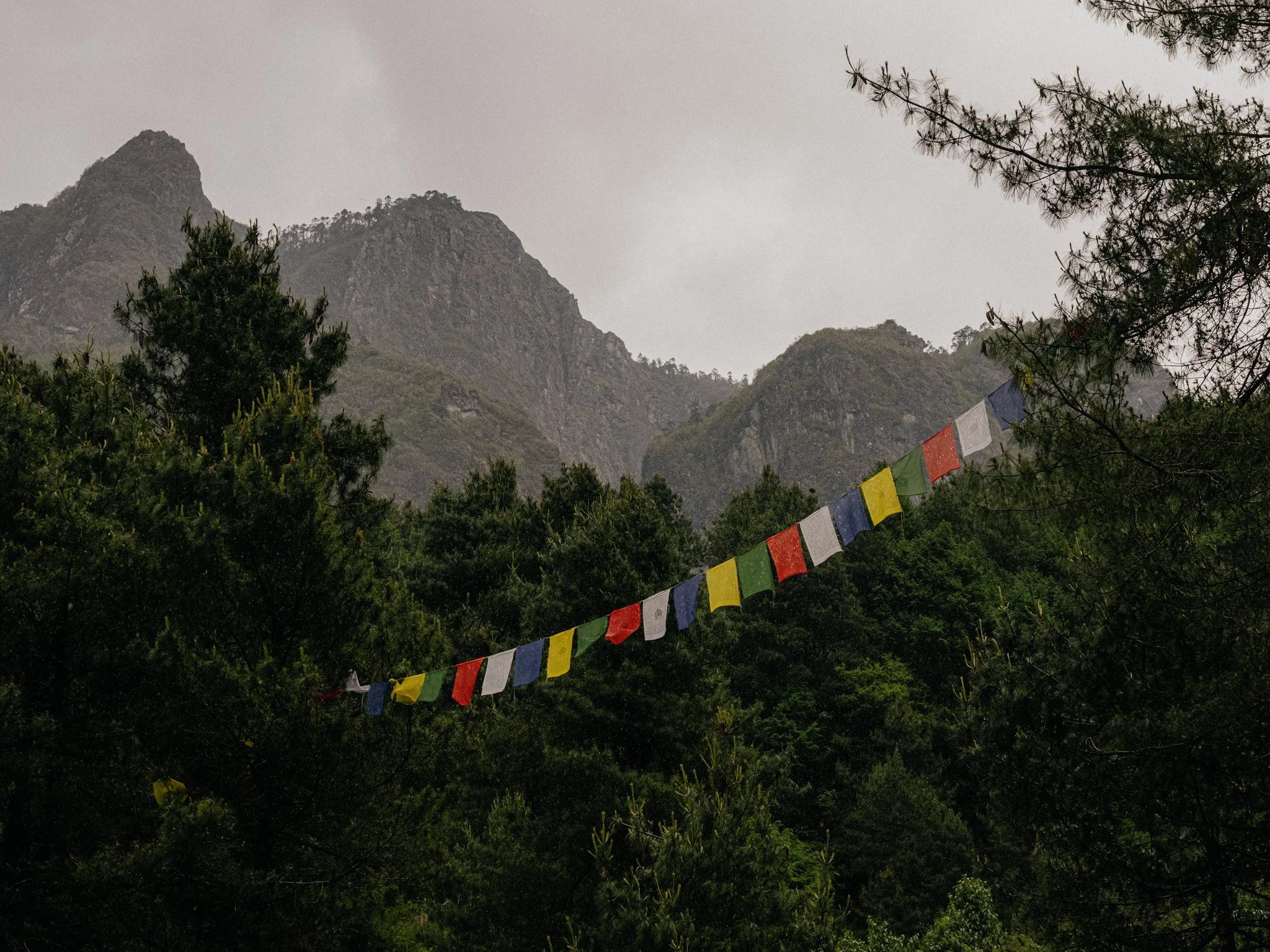
Continuing to develop operational equipment and resources, including sourcing a limited supply of women’s PPE to support wider and more inclusive participation within the service. With the recognised success of EFR in the region, other areas of Nepal have reached out to explore the EFR model and seek assistance from the Fire Aid Nepal team.
Project Timeline
2009–10
DSFRS station commander John Monaghan visits a Kathmandu fire station while on leave in Nepal, finds firefighters training with antiquated kit and almost no PPE, and returns the following year to set up a support project.
2012–13
Firefighters from Devon & Somerset and Tyne & Wear deliver the first training and donate a fire appliance and PPE to Kathmandu, Patan and Bhaktapur; UNDP funding then expands the programme across 22 municipalities.
- 122 firefighters trained
2014–15
Vehicles and Aquabox safe-water kits are donated to Pokhara and beyond, and Fire Aid engages UNDP, DFID and the Red Cross in the months ahead of the April 2015 earthquake.
2015
John Aitchison deploys to Nepal with the UK International Search and Rescue team after the April earthquake, and continues to return in support of disaster preparedness.
2022
Asked to help develop fire and rescue capability in the Khumbu, John works with local partners on a plan for a dedicated regional service.
2023
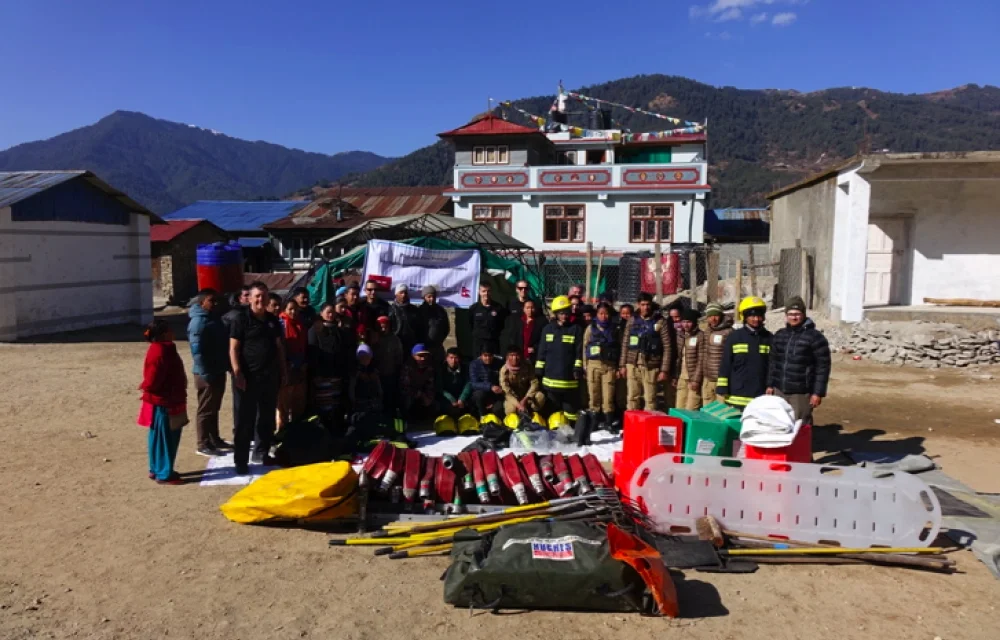
The first training deployment brings practical firefighting, rescue and medical training and equipment to communities across the Khumbu.
2023–2025
Training expands across the region, supported by donated equipment shipped from UK fire and rescue partners.
- 997 training attendances
- 6+ tonnes of equipment
2025
Ladder training is introduced using 10.5-metre ladders, and women’s-specific PPE is sourced to widen participation in the service.
- 3 villages
2025/26
Focus shifts to building local instructors through structured train the trainer modules, alongside new helicopter and aviation rescue capability.
2026
Work begins with partners from Australia on a rural wildfire team in the hills above Pokhara, as GLOF early warning and evacuation planning develop.
Next phase
Permanent fire stations in Lukla and Namche, USAR and technical rescue capability, and improved rescue provision around Everest Base Camp.
- 10-year development horizon
How Everest Fire and Rescue took shape
FIRE AID’s work in Nepal has grown over many years, but the story of Everest Fire & Rescue is closely connected to John Aitchison. Following his deployment to Nepal with the UK International Search and Rescue team after the 2015 earthquake, John continued to return to support disaster preparedness and emergency capability in Nepal.
In 2022, John was asked to help develop fire and rescue capability in the Khumbu. Working with local partners, he developed a plan to establish a dedicated fire and rescue servicefor the region, leading to the development of Everest Fire & Rescue.
Today, FIRE AID supports EFR through training, equipment, technical expertise and mentorship, with the long term aim of developing a sustainable, professional and locally led fire and rescue service for the communities of the Everest region.
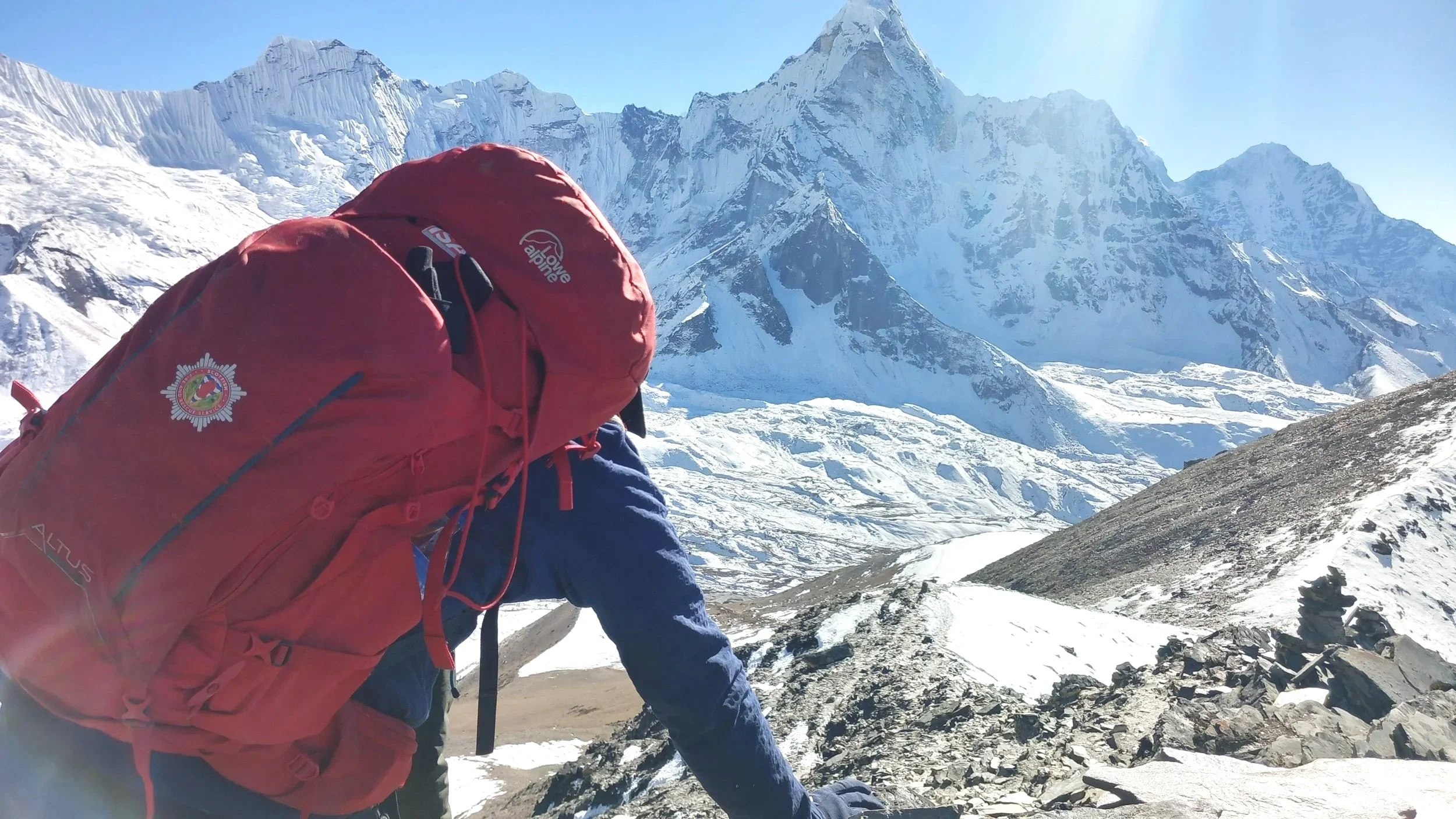
BUILDING PRACTICAL SKILLS IN THE KHUMBU
Everest Fire & Rescue is an independent Nepalese NGO working in partnership with Khumbu Pasang Lhamu Rural Municipality as the officially recognised Fire and Rescue Service for the Khumbu region.
FIRE AID supports Everest Fire and Rescue through training, equipment and technical expertise as part of a long term, 10-year development programme.
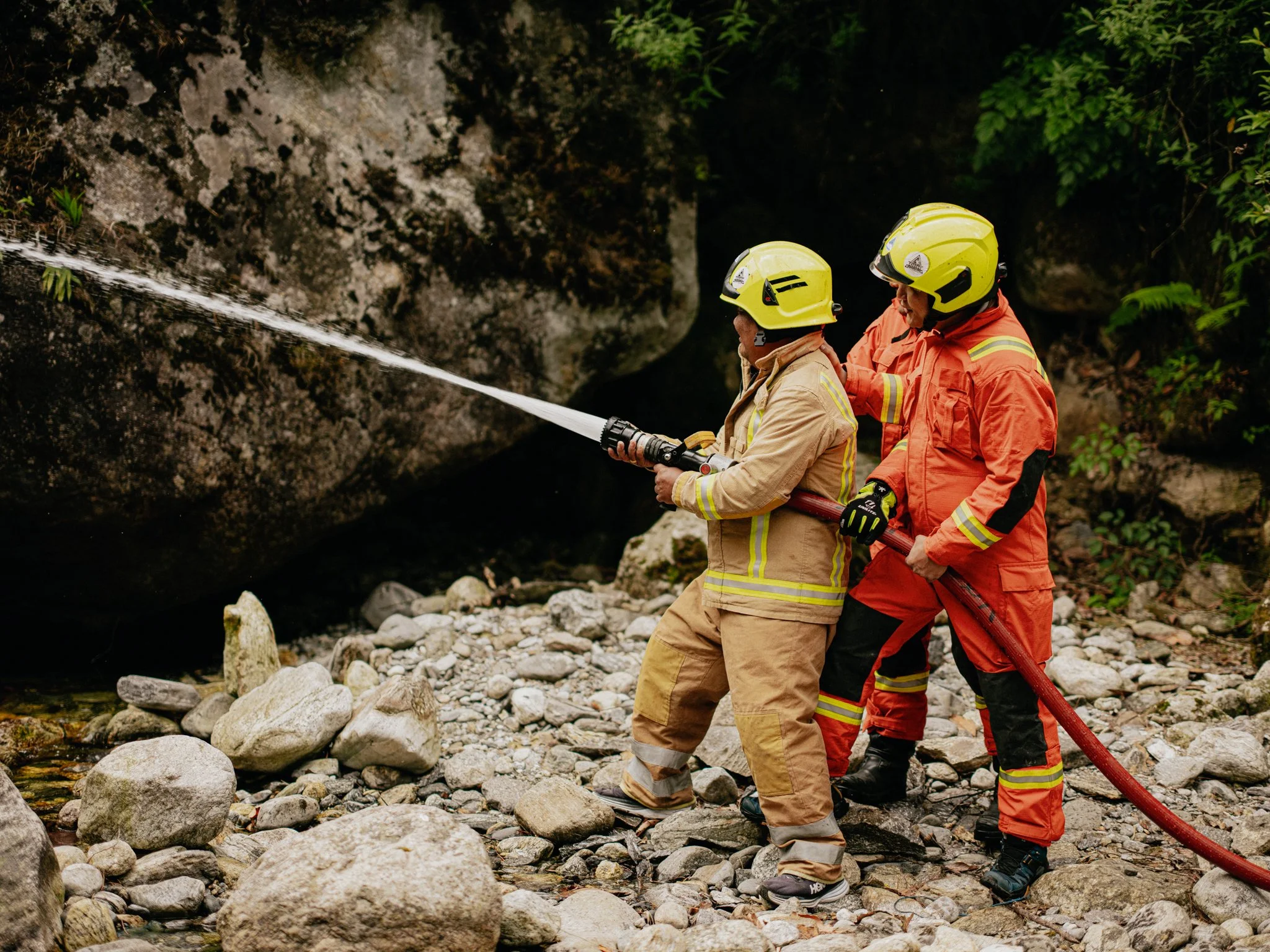
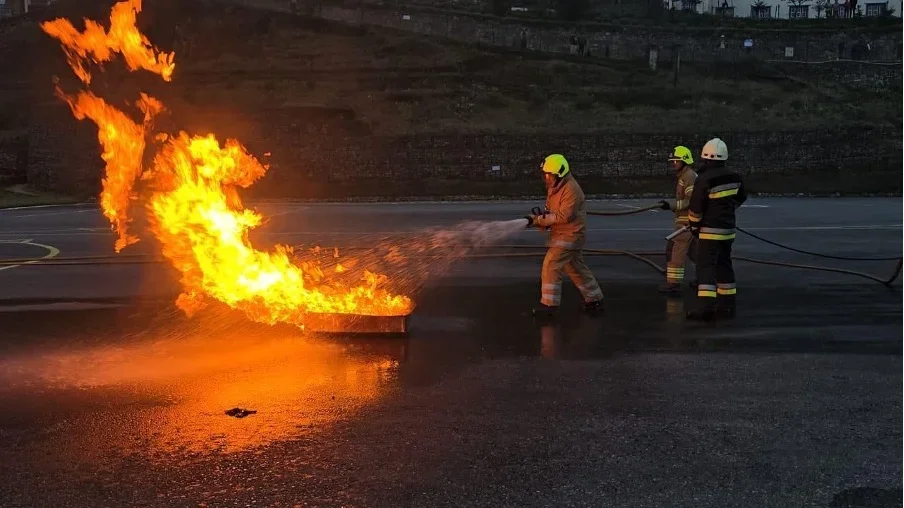
Training has built capability across firefighting, rescue and prevention. This has included hose management, branch techniques, portable pump operation, controlled fire exercises, defensive firefighting, safe working at height and ladder training. It has also included medical and first-aid training, mountain rescue skills, casualty management and fire prevention education, including smoke and carbon monoxide awareness.
Our focus is now shifting towards developing EFR’s own instructors and local leaders. Structured ‘train the trainer’ modules are being developed to give them the technical knowledge, teaching skills and confidence to train their own crews. This allows knowledge to remain within communities, strengthens local leadership and means EFR can continue developing its capability between international training deployments.
“The hands-on training we’ve received has given us the confidence to face real emergencies. The medical training has been especially powerful, not only does it help us save lives, but it allows us to share our knowledge with others, making the whole community stronger.”
BUILT BY THE COMMUNITIES IT SERVES
Stage 01
Community knowledge
Local volunteers, mountaineers, medical professionals, engineers, teachers and community leaders bring hard-won experience of working in the Khumbu. Training is delivered in their own villages, using local facilities and the conditions crews will actually face.
- 997 training attendances
- Delivered 2023–2025
Stage 02
Local instructors
Structured train the trainer modules give EFR leaders and crew members the technical knowledge, teaching skills and confidence to train their own crews, supported by incident command and leadership mentoring.
- Train the trainer modules
- Leadership mentoring
Stage 03
Wider participation
Skills spread between teams and communities along the Everest trail, and reach further through women’s groups, youth organisations and schools — widening who can take part in a sustainable volunteer service.
- Women’s-specific PPE sourced
- Schools & youth groups engaged
Local volunteers, mountaineers, medical professionals, engineers, teachers, community leaders and other specialists bring their experience of working in the unique environment of the Khumbu.
Local leadership is central to the development of the service. EFR leaders and crew members are being supported to develop as instructors and mentors, helping knowledge and skills to grow between teams and communities.
The project also works with women’s groups, youth organisations, schools, local hospitals, helicopter and aviation operators and other community partners to strengthen participation and preparedness.
“Equipment was carried by porters across mountain trails, and communities that had never before had formal emergency services began building their own local response capability.”
- John Aitchison KFSM Fire Officer Instructor, Scottish Fire and Rescue Service
Why Capability Has To Be Local
The remote and mountainous landscape of the Himalayas makes providing emergency services particularly challenging. Communities across the Khumbu are spread across high-altitude terrain, with limited road access and changeable weather conditions. Many areas can only be reached by foot, helicopter or locally available transport such as porters, yaks and mules.
The Khumbu is home to approximately 8,720 residents, while around 55,000 visitors travel through the region each year. The region faces a wide range of hazards, including structural and wildfire risks, carbon monoxide incidents, landslides, avalanches, earthquakes and glacial lake outburst floods. These conditions can cause incidents to escalate quickly and make emergency response difficult.
Developing trained local teams, appropriate equipment and community preparedness enables people to respond earlier and closer to where emergencies happen, with capability suited to the unique challenges of the Khumbu.

A message from a fire aid instructor
“Our aim is to work alongside local teams to support the development of a self-sustaining fire and rescue capability in the Khumbu. Each deployment focuses on building and maintaining skills, while continuing to grow training capacity further up the trail”.
- Kai Strachan, Instructor
Equipment Only Travels With Training
Over the last three years, more than six tonnes of donated equipment has been shipped to Nepal. This has included firefighting PPE, rescue tools, medical supplies, detection equipment and specialist resources for remote rescue.
Getting equipment to the Khumbu is only part of the challenge. Maintaining, storing and deploying it effectively is equally important. EFR is developing equipment maintenance and local training alongside plans for permanent facilities in Lukla and Namche.
The long-term aim is to ensure that resources remain operational, accessible and managed locally by the teams who rely on them, supporting sustainable capability rather than dependence on external support.
turning growing capability into a sustainable service
The goal is to build a professional, accountable and community-led fire and rescue service that is developed, led and governed by the people of the Khumbu.
Building the next phase
The next phase of Everest Fire & Rescue is focused on turning growing capability into sustainable infrastructure and locally led systems.
A key priority is the establishment of permanent fire stations in Lukla and Namche. These facilities would provide secure equipment storage, workshops, training classrooms, welfare and debriefing space, and operational hubs for coordinating activity across the Khumbu.
Alongside this, EFR is continuing to develop local instructors, GLOF preparedness, technical rescue capability and improved rescue provision around Everest Base Camp.
Support is needed to turn these plans into operational capability. This could include financial sponsorship, equipment and logistics partnerships, professional expertise, training support or institutional collaboration.
Nepal news
Become part of the network
Every project is built through collaboration. Whether you represent a fire and rescue service, a company or simply want to support our work, there are many ways to help strengthen fire and rescue capability around the world.
aBout the data
Figures on this page are drawn from FIRE AID operational records, project reports and visits, and information provided by Everest Fire and Rescue. Data reflect the reporting period stated and equipment totals are recorded at the point of transfer.