
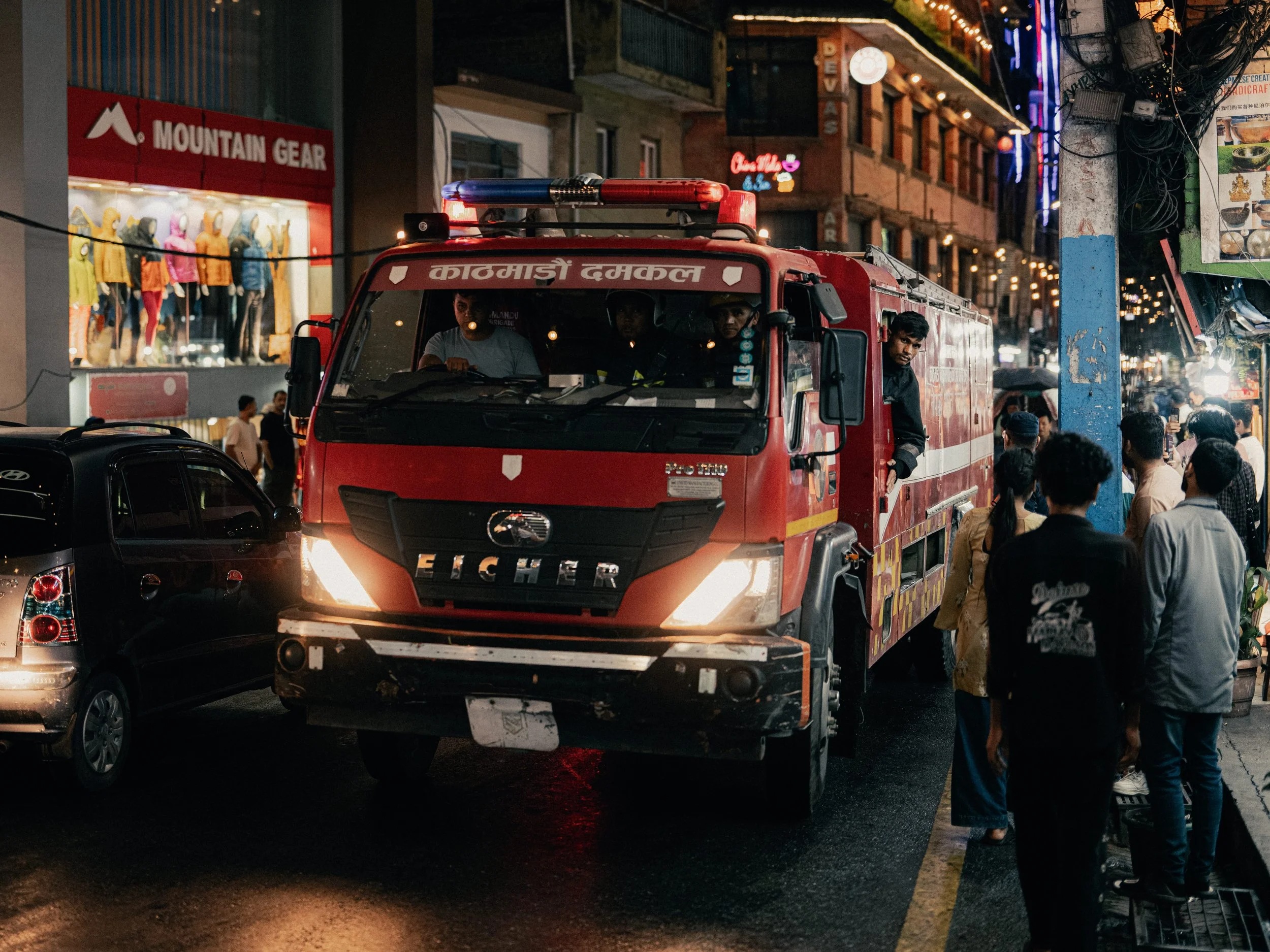
FIRE PREVENTION
AND PROTECTION
Strengthening fire and rescue systems in nepal
Fire and rescue capacity is uneven across Nepal. In many communities, difficult terrain, distance, and limited access to equipment and training can constrain how quickly and safely emergencies are dealt with.
With The Gurkha Welfare Trust (Nepal), and community partners, we improve early warning, fire risk awareness and practical fire safety. When emergencies happen, responders need the equipment, training and specialist skills to act. We equip and train firefighters and emergency responders, including teams developing disaster response and specialist rescue capability across Nepal.
Across both areas, our operating principle is local priorities determine the support provided, combining equipment, training, prevention and practical knowledge around the risks communities and services actually face.
Our impact since 2012
DISTANCE, DENSITY AND LIMITED EARLY WARNING
Fire risk in Nepal is shaped by where people live and how quickly help can reach them. In densely built areas, fire can spread rapidly between buildings. In remote and mountainous communities, steep terrain, limited road access and long travel times can leave people managing the first critical stages of an emergency before responders can arrive.
The risk often begins before a fire is visible. Electrical faults, LPG leaks and open flames are common causes, while many communities have limited access to smoke and carbon monoxide alarms. Poor ventilation in homes, guesthouses and mountain lodges can make carbon monoxide particularly dangerous.
Where early warning, firefighting equipment and trained responders are limited, a manageable incident can become much harder to contain.
Our Response
FIRE AID works with Nepali fire and rescue services, The Gurkha Welfare Trust, and specialist emergency response partners to address gaps in equipment, training, prevention and disaster response.
We equip and train firefighters, support community fire safety and develop specialist response where it is needed. Priorities are set with partners in Nepal, so the response follows local need.
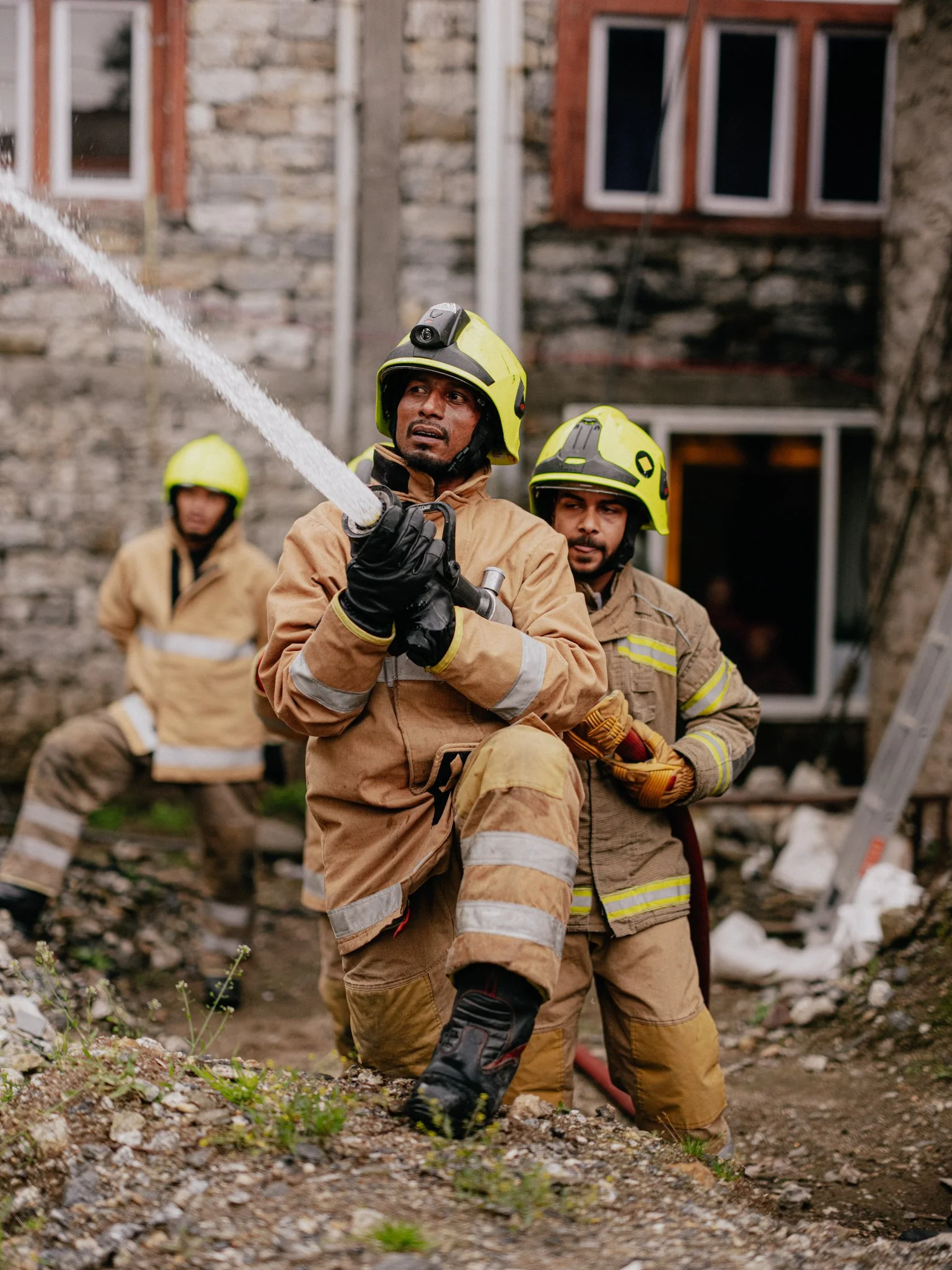
FIREFIGHTER TRAINING
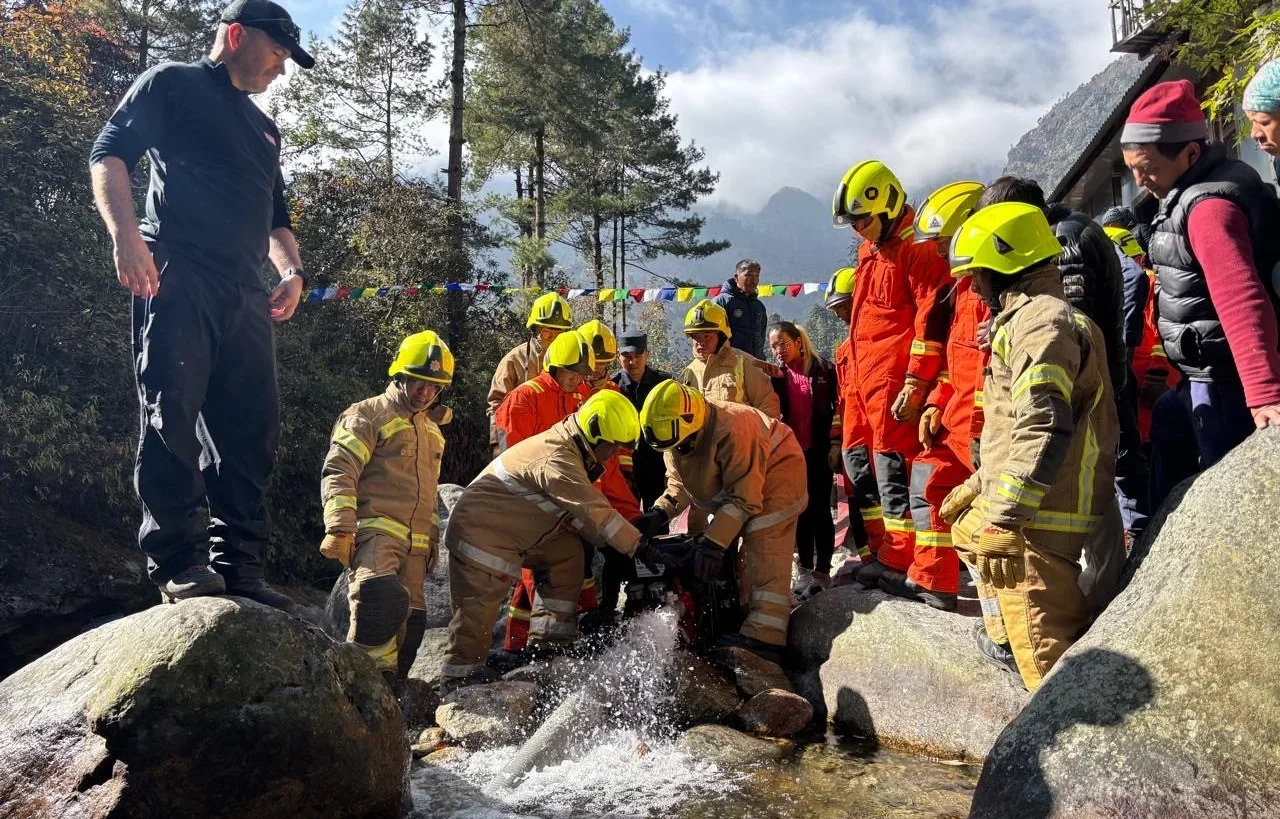
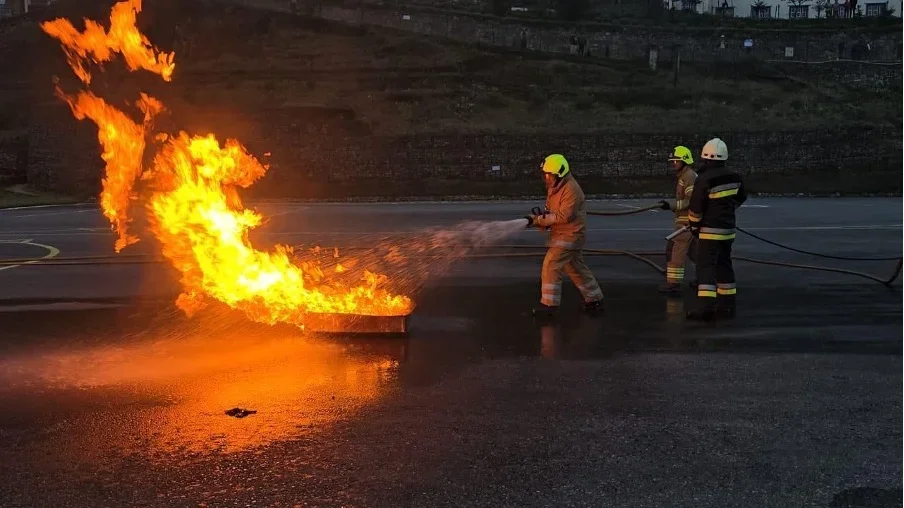
FIRE AID trains firefighters in the practical use of donated equipment and supports the development of local training capacity. An estimated 450 firefighters across Nepal have received training from FIRE AID teams, including crews in Kathmandu, Lalitpur, Bhaktapur, Pokhara and fire services in towns and municipalities across the country.
National courses delivered with the United Nations Development Programme trained 122 firefighters from 17 municipalities. Eight Nepalese firefighters were identified as potential instructors and went on to teach alongside UK instructors, helping to build the capacity to deliver training locally.
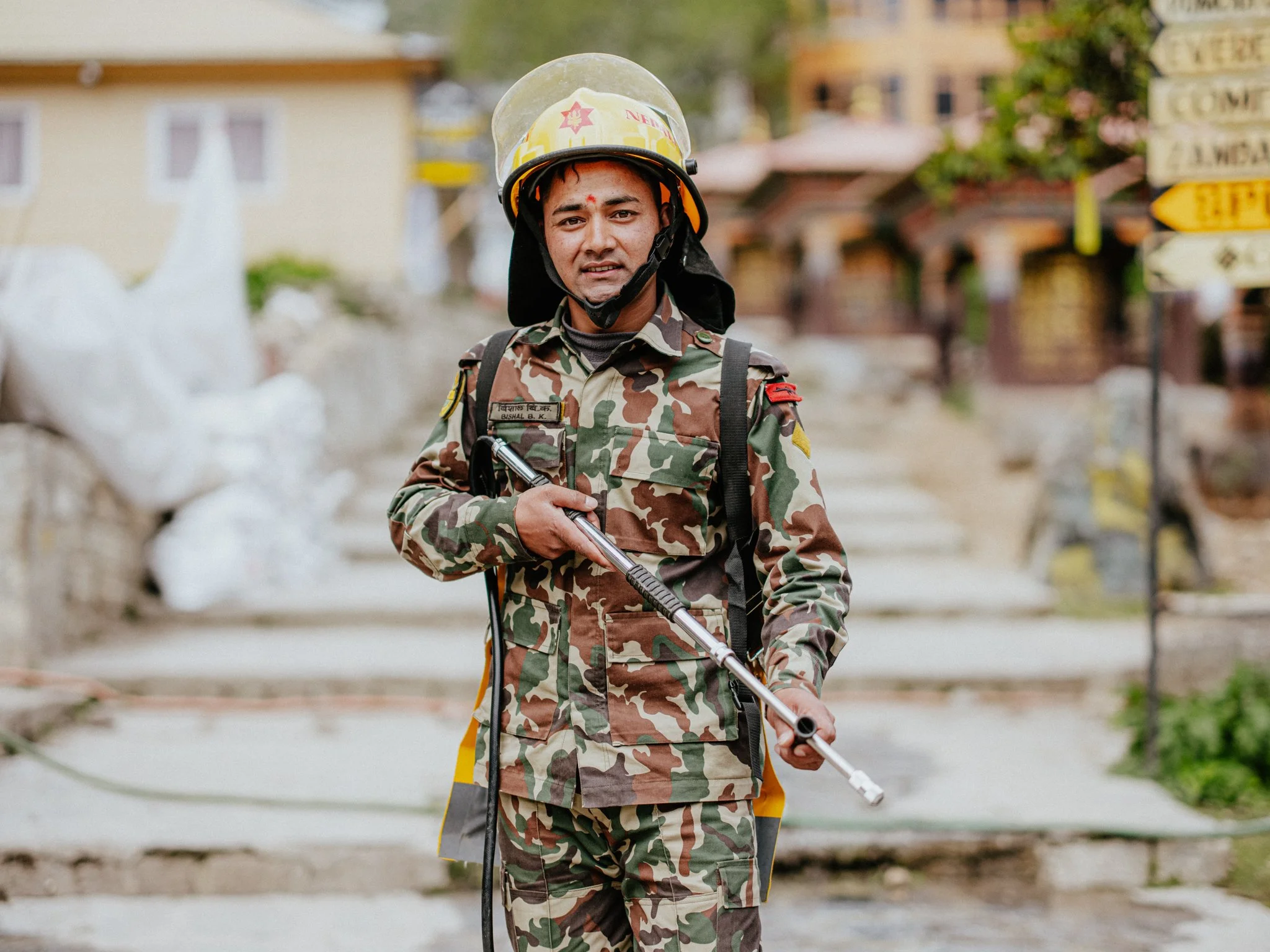
DISASTER RESPONSE
Large emergencies demand specialist skills as well as equipment. In Nepal, we support disaster response training with national emergency services and help build search and rescue capability for incidents that go beyond routine firefighting.
Training has been delivered at the Nepal Army Disaster Management School at Gokarna and the Nepal Armed Police Disaster Management School at Kurintar following requests from the services themselves. After the 2015 earthquake, more than 200 sets of protective equipment were also provided alongside over 1,500 clean water kits through Aquabox.
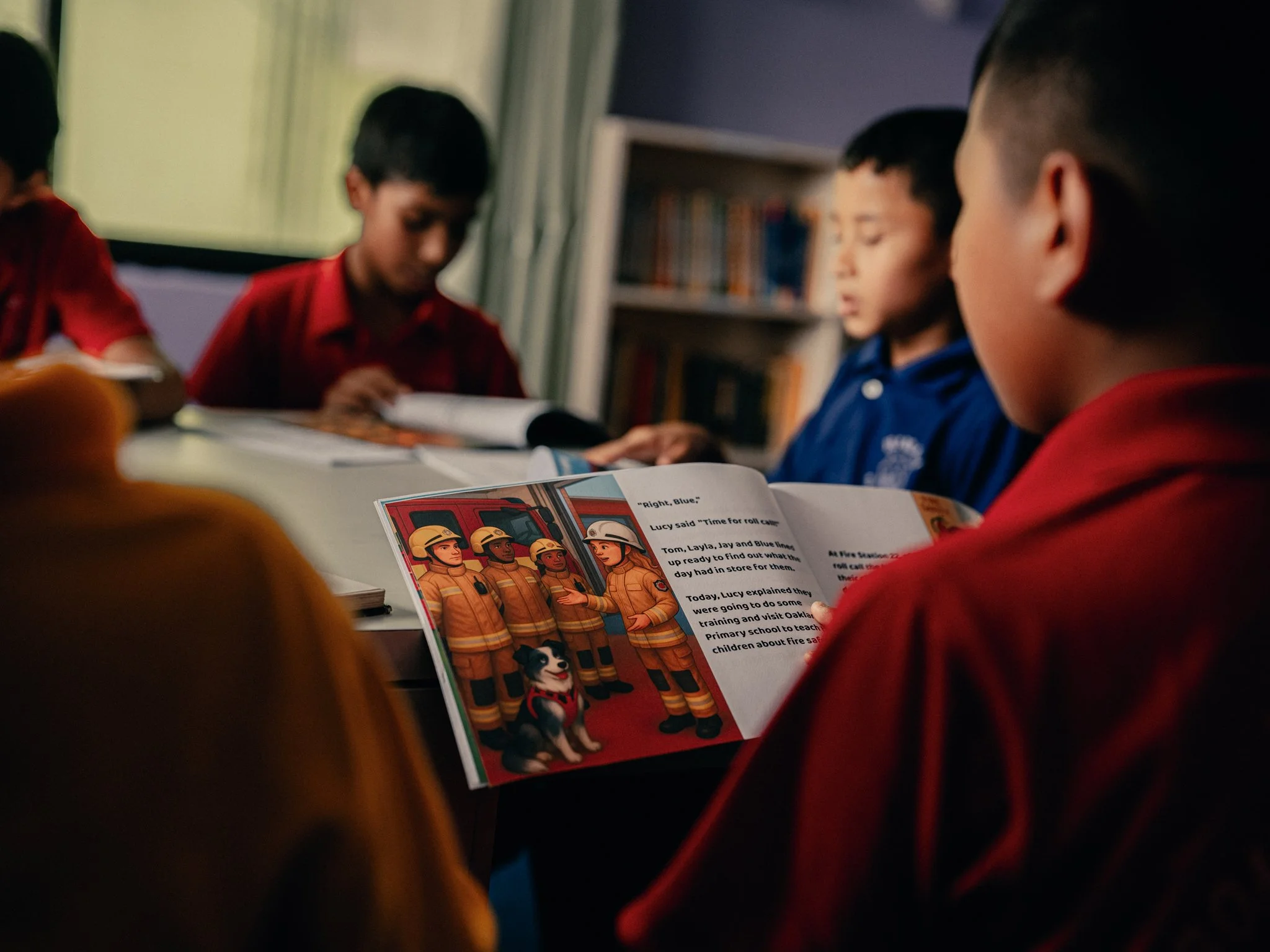
coMMUNITY FIRE SAFETY
FIRE AID works with The Gurkha Welfare Trust (Nepal) to reduce fire risk through its network of 21 Area Welfare Centres, including centres serving remote communities. The work combines fire risk assessment, awareness training, practical extinguisher training and early warning equipment.
At least 335 people have received community fire safety and risk assessment training through Welfare Centres and community groups. In 2025, 120 smoke detectors, six heat detectors and six carbon monoxide detectors were installed across four Area Welfare Centres, alongside guidance on testing, maintenance and fire safety.
eqUIPPING FIRE SERVICES
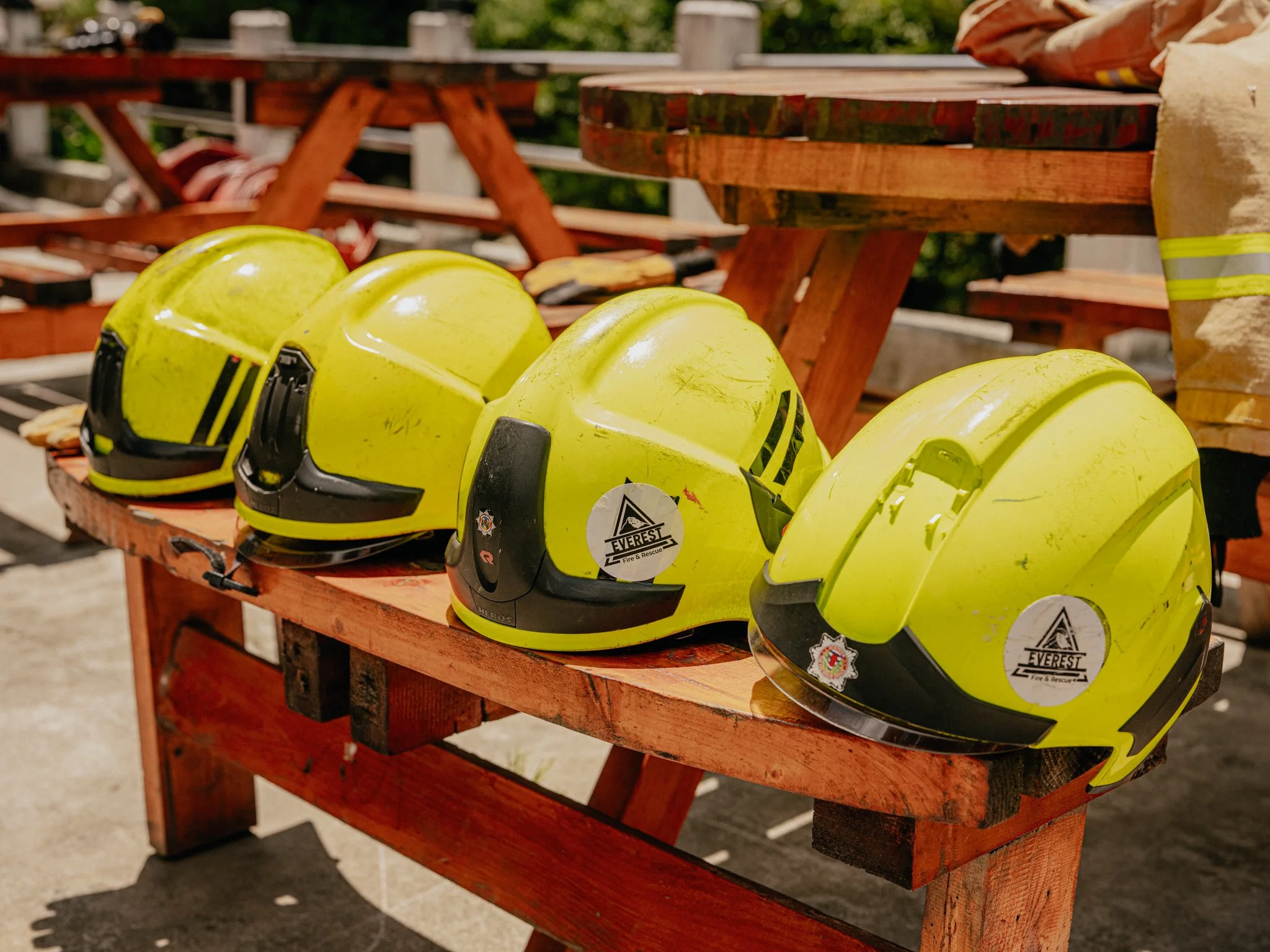
We provide functional, decommissioned fire and rescue equipment where services have identified gaps in what their crews need.
At least 40 container loads of equipment, including small firefighting vehicles, are estimated to have been sent to Nepal over the course of the programme. That has included fire engines, protective clothing and more than 400 sets of firefighting equipment provided in one early deployment alone. Work through The Gurkha Welfare Trust has also helped identify needs at remote fire stations with limited access to basic equipment and training.
Project Timeline
2009
UK firefighter John Monaghan visits a Kathmandu fire station while on leave in Nepal and sees the limited equipment, protective clothing and training available to local firefighters.
2010
The first donation of decommissioned protective equipment from Devon & Somerset Fire & Rescue Service reaches Nepal. This is the first milestone and the foundation for the work that follows.
Early 2012
John returns to Nepal twice in quick succession. On the first visit a team from Devon trains firefighters from Kathmandu New Road fire station on donated equipment. A month or two later, once a donated Volvo fire engine arrives, he returns with a joint Devon and Tyne & Wear team. Firefighters trained on both trips are counted in the totals below.
2012
Access to the MOD distribution network is agreed following discussions with the British Embassy in Kathmandu, British Gurkhas Nepal, British Gurkha HQ Aldershot and British Army HQ Abbeywood in Bristol. Equipment for the programme has since been sent through the MOD Logistics Hub, making it possible to move substantial quantities of kit to Nepal.
2012–13
Firefighter training courses run in association with the United Nations Development Programme are supported through funding arranged by John with George Murray of UNOCHA. Eight Nepali instructors are identified and teach alongside the UK team on the second and third courses.
- 122 firefighters trained
- 17 municipalities
- 8 Nepali instructors
2015
Following the April earthquake, the programme supports disaster response with more than 200 sets of protective equipment, alongside over 1,500 clean water kits provided through Aquabox.
- 200+ sets of PPE
- 1,500+ water kits
2018
Following a direct request from the Nepal Army, John sets up disaster relief training at the Nepal Army Disaster Management School in Gokarna. The 2018 course is jointly led by John Aitchison of Fire Scotland and George Bartlett from Devon. Since then, John Aitchison has led search and rescue work in Nepal.
2018 onwards
Community fire safety awareness and risk assessment training begins at Gurkha Welfare Trust Area Welfare Centres, with annual sessions delivered from 2018 apart from the two COVID years. Hotelier groups in Kathmandu and community groups in Pokhara and Dingboche are trained alongside. Work across the centres also identifies remote fire stations that have been overlooked and are in need of basic kit and training.
- 335+ community members trained
2023
Following a direct request from the Nepal Armed Police Force, John sets up disaster relief training at the Nepal Armed Police Disaster Management School at Kurintar.
2024
John Monaghan is awarded an MBE in March for services to emergency and disaster response and to local communities in Nepal.
2025
In November, a team of four volunteers installs smoke, heat and carbon monoxide detectors donated by FireAngel across four Gurkha Welfare Trust Area Welfare Centres, alongside fire safety training, guidance and audit tools.
- 120 smoke detectors
- 6 heat detectors
- 6 carbon monoxide detectors
- 4 of 21 centres
Since 2010
Around 25 working trips of four to six weeks each, with firefighter training delivered at stations from Kathmandu and Lalitpur to Pokhara, Chitwan, Dharan, Damak, Butwal, Salleri, Mechinagar and Bandipur. John has organised and led Devon & Somerset Fire & Rescue Service work, received the initial requests and helped set up John Aitchison’s search and rescue work and UKRO’s road traffic collision work, excluding John Aitchison’s separate Khumbu Sherpa Project / Everest Fire and Rescue Service work.
- Approx. 450 firefighters trained
- 46 UK volunteers
- 40+ container loads
Next phase
Planned next steps include extending alarm installations across the remaining Area Welfare Centres, alongside annual fire safety education campaigns, improved protection in homes, guesthouses and community buildings, and continued firefighter training and equipment support across Nepal.
A LONG TERM PARTNERSHIP MODEL
Our work in Nepal is built on relationships developed over many years. We work alongside fire and rescue services, government and disaster response organisations, community leaders, mountain communities and partner charities to strengthen local fire safety and emergency response capacity.
This long-term approach means that interventions are driven by local need rather than simply by what equipment is available to donate.
From UK fire services
UK fire and rescue services donate decommissioned protective clothing, equipment and small firefighting vehicles for continued use where appropriate. New equipment is also donated by partners, including FireAngel alarm equipment.
Through the MOD Logistics Hub
Access to the MOD distribution network was agreed following discussions with the British Embassy in Kathmandu, British Gurkhas Nepal, British Gurkha HQ Aldershot and British Army HQ Abbeywood. This has enabled the programme to move substantial quantities of equipment to Nepal that would otherwise have been prohibitively expensive to transport.
Supporting communities in Nepal
Equipment is supplied to fire stations across Nepal and supports Gurkha Welfare Trust activities, including remote rural medical camps. Work through the Trust’s Area Welfare Centres also helps identify remote fire stations that have been overlooked and need basic kit and training.
Equipment plus training
Equipment is paired with practical firefighter training, fire safety awareness, risk assessment and extinguisher training for community groups. The 2012–13 firefighter courses also identified and developed eight Nepali instructors, who taught alongside the UK team on later courses.
firefighter to firefighter
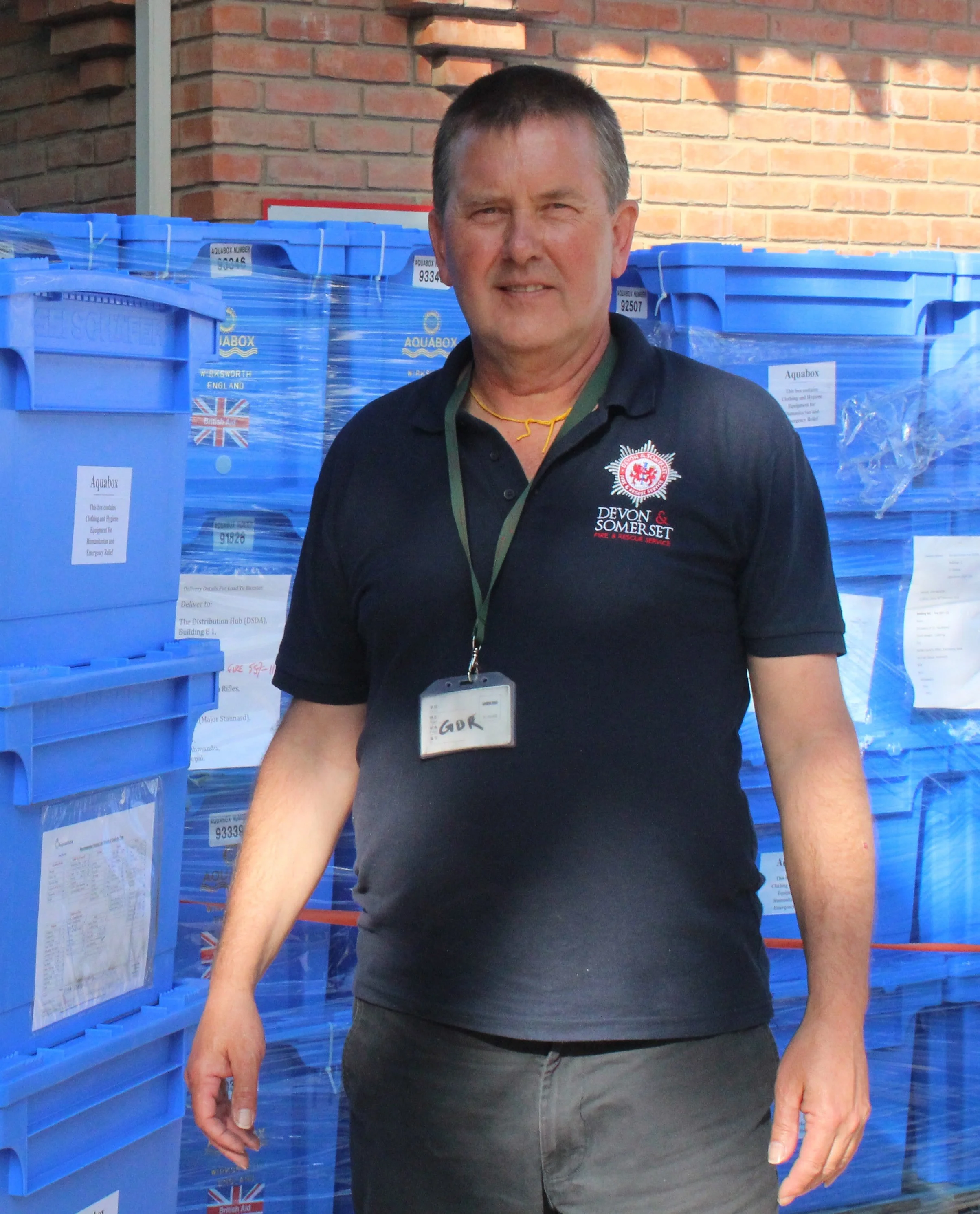
Firefighter John Monaghan has worked with firefighters and communities in Nepal since 2009, when he first saw the shortage of equipment, protective clothing and training available to local crews. Since then, he has returned around 25 times and helped train approximately 450 Nepalese firefighters.
For John, lasting fire safety means working with organisations already trusted by the communities they serve. “By working with trusted partners… we are helping ensure that people have the earliest possible warning of fire, giving them the time they need to act.”
Closing the fire and rescue gap in Nepal
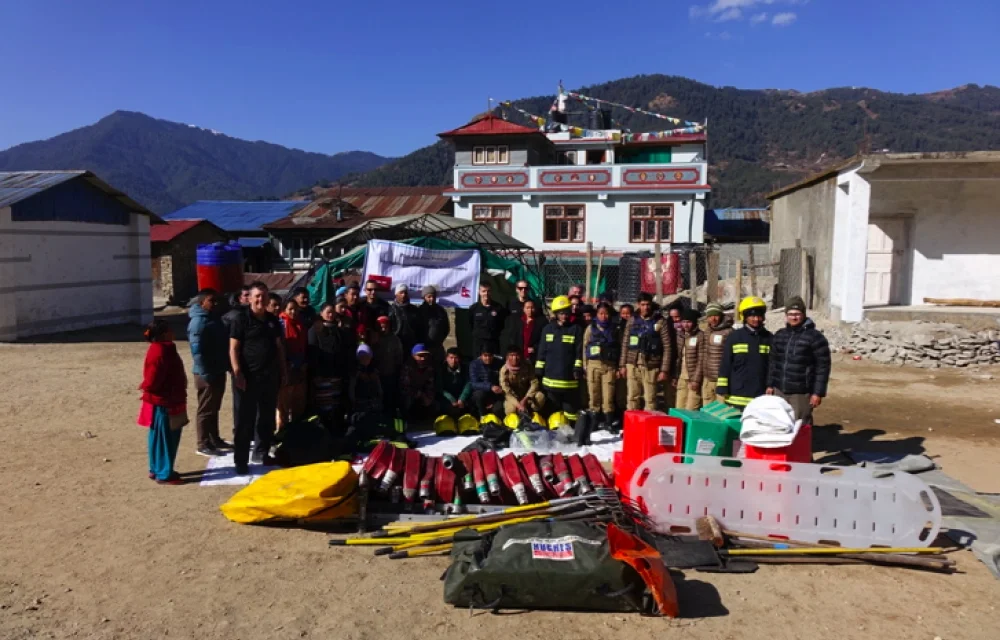
As part of our work with The Gurkha Welfare Trust, FIRE AID has provided field shelters, lightweight stretchers and staircase evacuation chairs to support vulnerable people and communities in remote areas, including during community medical camps.
The partnership combines practical equipment with fire risk assessments, fire safety awareness and extinguisher training for staff and community groups. This helps meet immediate needs while building local knowledge and preparedness for future emergencies.
Nepal news
Become part of the network
Every project is built through collaboration. Whether you represent a fire and rescue service, a company or simply want to support our work, there are many ways to help strengthen fire and rescue capability around the world.
aBout the data
Figures on this page are drawn from FIRE AID operational records, project reports and visits, and information provided by FIRE AID advisors. Data reflect the reporting period stated and equipment totals are recorded at the point of transfer.