
GHANA
STRENGTHENING FIRE AND RESCUE CAPABILITY IN GHANA
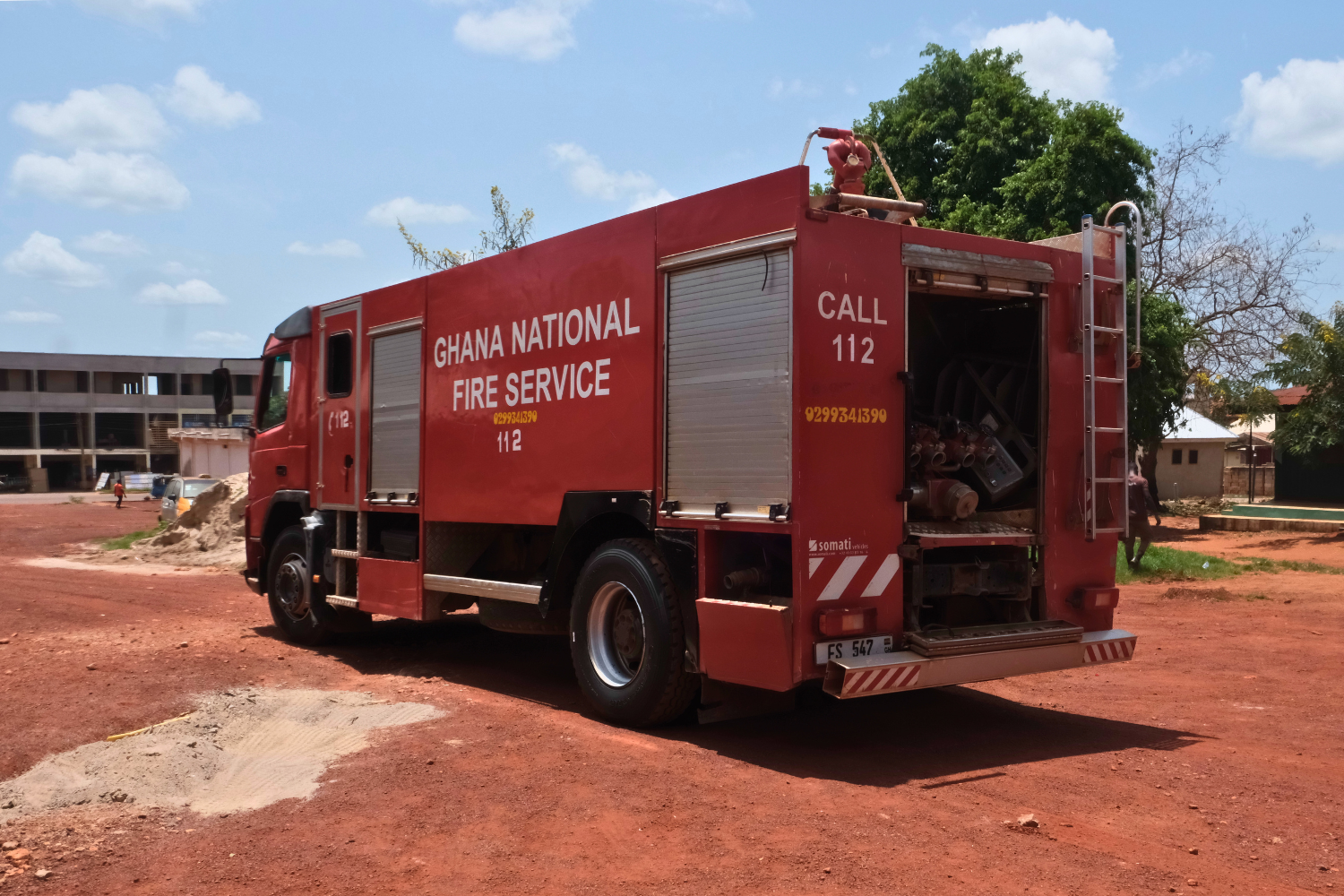
FIRE AID is working directly with the Ghana National Fire Service (GNFS) on a structured programme of training, equipment and professional development.
Together, we are developing Ghanaian instructors, building specialist road traffic collision, incident command and medical skills, and improving access to the equipment firefighters need. The focus is not only on meeting immediate operational needs, but on helping GNFS build knowledge and resources that can be sustained and shared across the service.
Building firefighting capability in Ghana
What began as a two-week road traffic extrication training course in 2002 has developed into a long-term partnership focused on strengthening frontline response and building skills that can be sustained within the service.
The partnership is formalised through a memorandum of understanding with GNFS, with support from the British High Commission. The next priority is strengthening training across the service.
Working with GNFS, FIRE AID is developing a structured annual training programme shaped around its operational priorities. A train-the-trainer approach will equip Ghanaian instructors with the skills and knowledge to train their own teams, share good practice across the service and build capability that can be sustained locally. Equipment, training and local expertise need to develop together if improvements in emergency response are to last.
FROM BUSHFIRES TO BUSY MARKETS: GHANA’S CHALLENGE
Across Ghana, firefighters respond to very different risks. Bushfires threaten farmland, vegetation and rural communities, while fires in homes, businesses and busy markets can put large numbers of people and livelihoods at risk. Road traffic collisions and other rescue incidents place further demands on crews.
The Ghana National Fire Service combines emergency response with prevention, public education and community fire volunteer programmes. FIRE AID is supporting that work by strengthening specialist skills, developing instructors and improving access to the equipment and resources firefighters need to respond effectively.
Our response
Ghana’s fire and rescue services face unique operational challenges, from seasonal bushfires and remote farming communities to rapidly growing towns where every minute matters. Working alongside the Ghana National Fire Service, United Kingdom Rescue Organisation (UKRO) and international partners, we are helping strengthen operational capability through equipment, training and long-term collaboration.
SPECIALIST EQUIPMENT
Transfer
From assessment through to delivery, each donation is matched to genuine need, considering terrain, town size, and the realities crews face on the ground.
Each equipment transfer is supported by training and long-term collaboration, helping build sustainable fire and rescue capability beyond the initial donation.
TRAINING & CAPACITY BUILDING
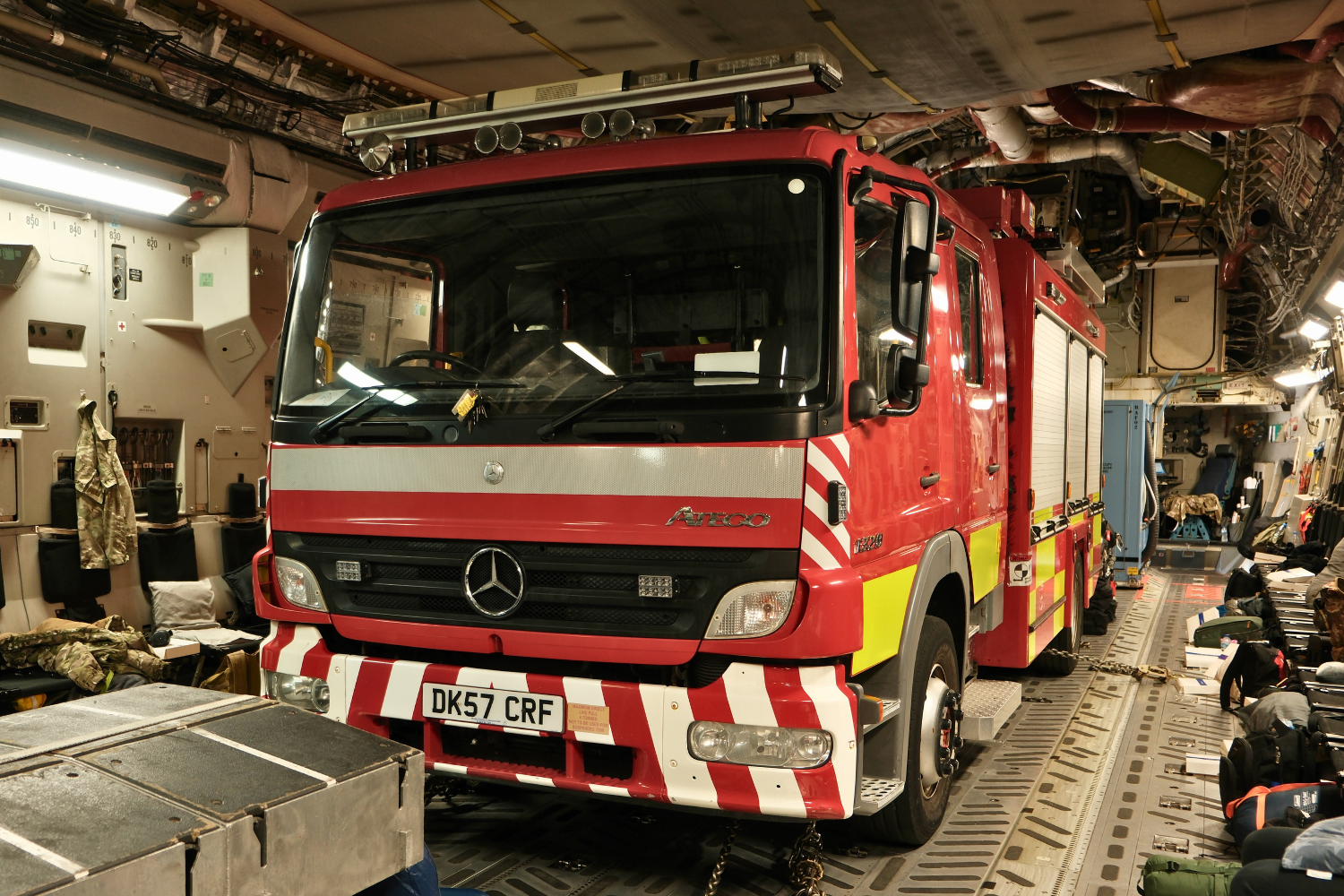
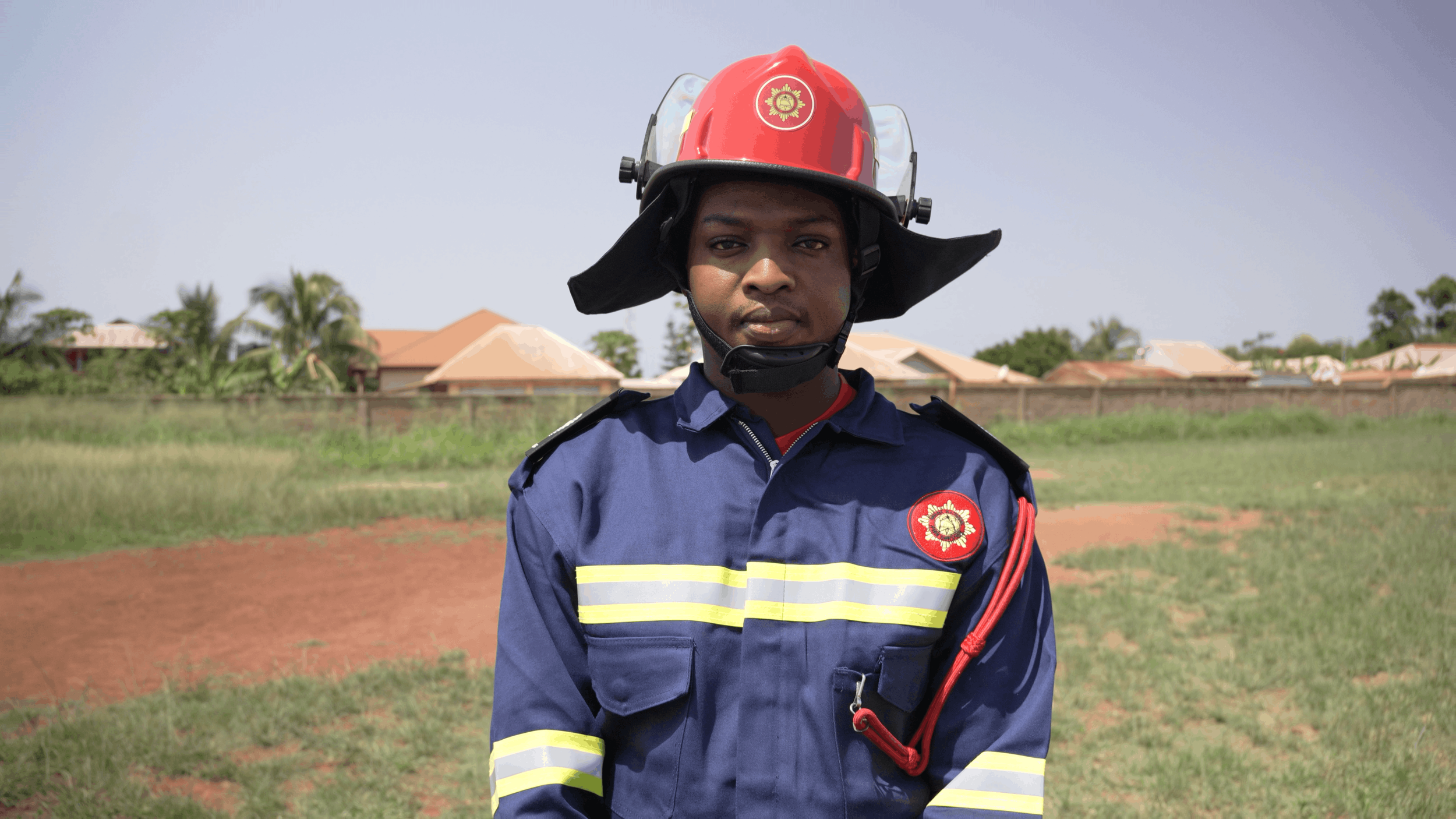
Every equipment transfer is supported by practical training to ensure firefighters can use new vehicles safely and effectively from day one.
Before the Rapid Response Vehicle entered service in Techiman, five firefighters from the Bono East Region completed hands-on operational training, equipping them to operate the vehicle and pass their knowledge on to colleagues across the Ghana National Fire Service.
PARTNERSHIP
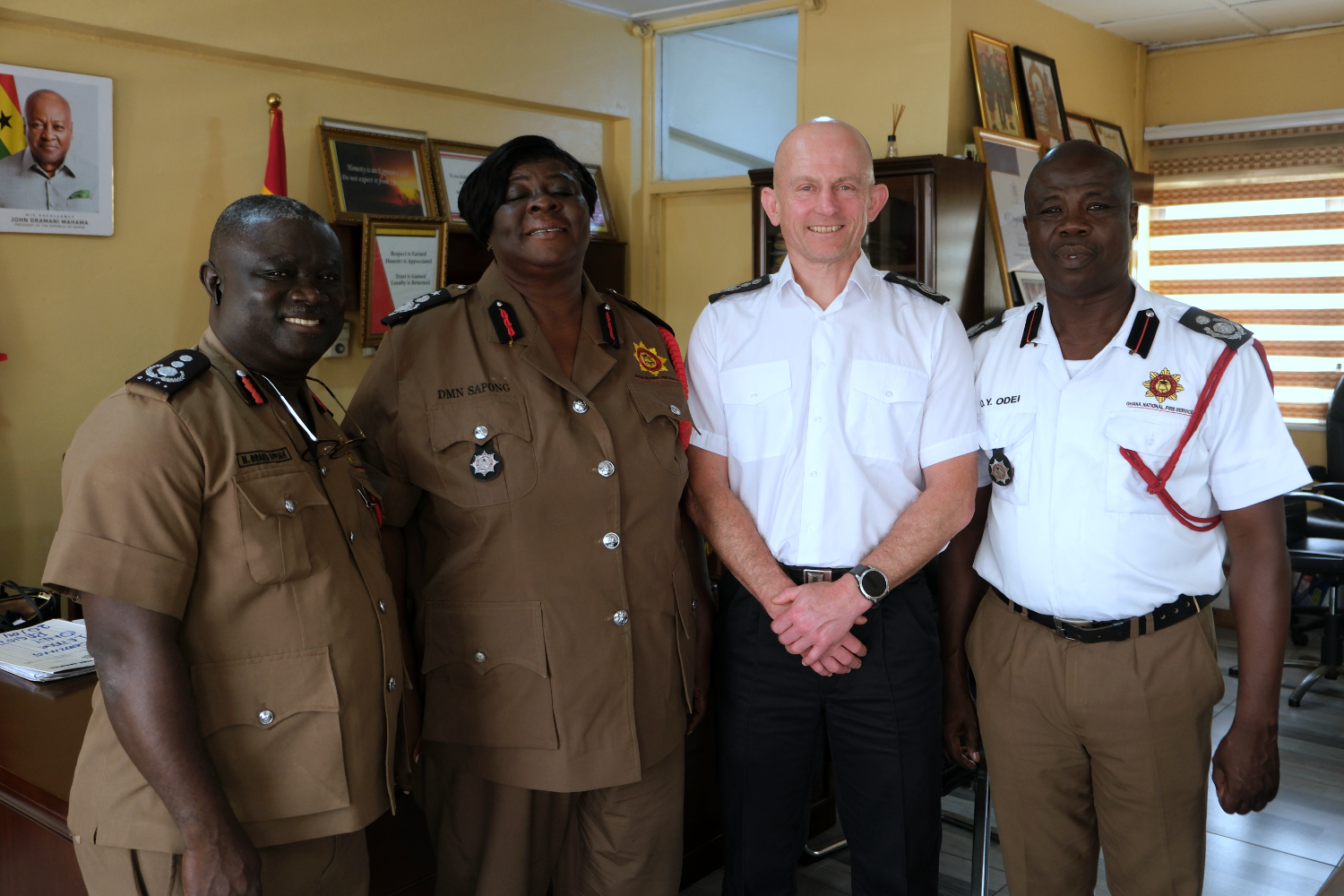
The partnership between FIRE AID and the Ghana National Fire Service has evolved over many years. Alongside equipment donations and training, it has become a relationship built on shared learning.
As our partnership grows, so does our understanding of what works best in Ghana, helping shape future vehicles, strengthen local capability and ensure every project is driven by the needs of Ghanaian firefighters.
“It’s easy to write a cheque. What’s harder—and more meaningful—is showing up with the right tools for the right problem.”
Project History
2002
Richard Gallup, a retired South Yorkshire station officer already travelling to Ghana with adventure scouts, makes contact with the Ghana National Fire Service and delivers a two-week road traffic collision course.
- First UK deployment
2003
Rob MacDougall, now Chief Fire Officer, joins the second trip as road traffic instructor, stepping in for a colleague from Oxfordshire’s national championship extrication team. The partnership grows from there.
2008
A container of hydraulic rescue equipment, released as Oxfordshire re-equips, is shipped to Ghana and distributed across the country over three months.
- 70 sets of hydraulic equipment
2013
GNFS teams compete at extrication challenges in the UK, Wales, Germany and the United States, and host national challenges at Independence Square. The last challenge runs this year as leadership and funding changes stall the model.
- 2 national challenges hosted
2023/24
A donated 4x4 vehicle from Dubai reopens the conversation with GNFS, and re-engagement begins after a decade of pause.
2025
A Mercedes-Benz fire tender and firefighting equipment are handed over at Accra International Airport by Chief Fire Officer Rob MacDougall, received by Ghana’s Chief Fire Officer and the Deputy Minister for the Interior.
- 1 fire tender delivered
2025/26
Focus returns to training, with a structured annual programme planned alongside GNFS and shaped each year around their operational priorities.
- 2 programmes a year planned
- Up to 25 personnel per course
Next phase
Train the trainer development to build GNFS instructor capability from within, with medical training in every course and donated rescue equipment and PPE agreed in advance with the service.
- Annual 40ft container
THE RAPID RESPONSE VEHICLE
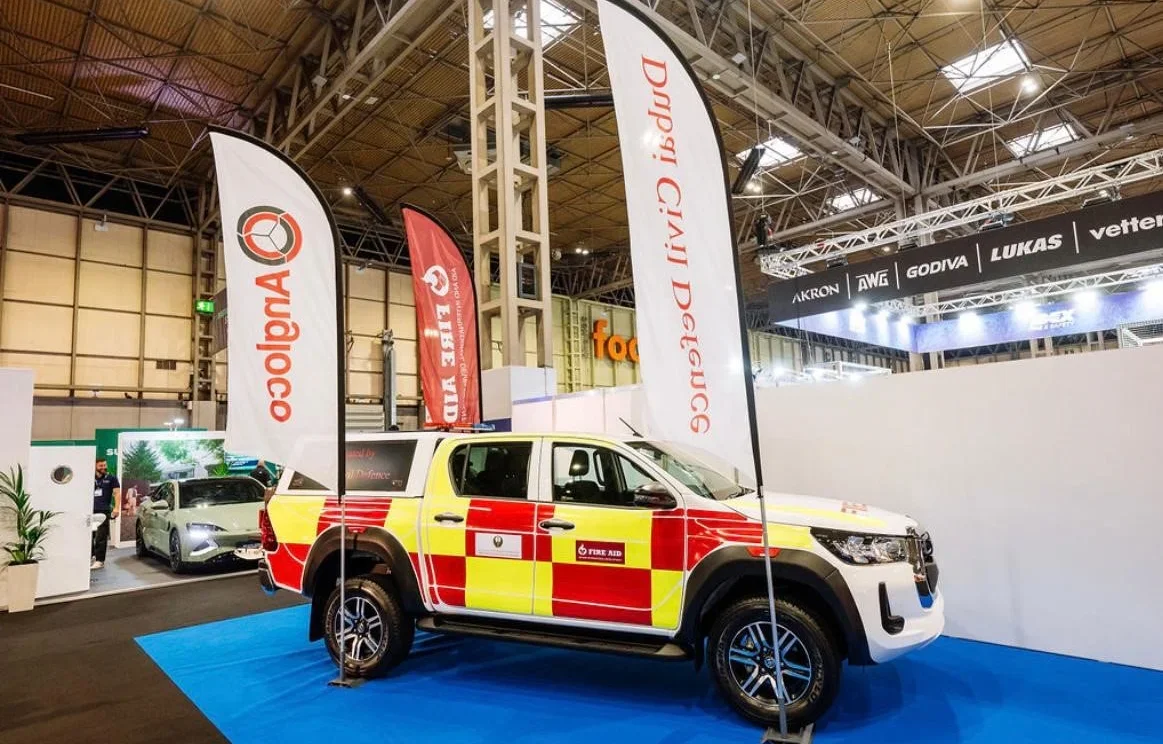
Donated by Dubai Civil Defence, coordinated by FIRE AID and transferred to the Ghana National Fire Service, the Rapid Response Vehicle (RRV) has become more than a vehicle donation.
An 18-month operational review recorded 73 incidents and faster response times, providing operational evidence that now shapes future deployments across the wider Africa programme.
Rapid Response Vehicle — Techiman, Bono East Region
In its first 18 months in service, the RRV attended 73 incidents as the first and only responder. What it was called to shows the range of risks Ghanaian firefighters face in a single municipality.
Domestic fires
29
Commercial fires
15
Bush fires
9
Vehicle fires
6
Road traffic accidents
3
Bee swarms
3
False alarms
3
Institutional fires
2
River and well rescues
2
Fuel spillage
1
- Fires
- Other emergencies
59
Fires held with the onboard tank
Contained using the vehicle’s own 470-litre high-pressure system, without waiting for the main pump.
6 min
Average time saved per call
Reduction in turnout-to-arrival time compared with the ageing Volvo appliance at Techiman.
2–3
Crew required
A smaller crew, lower running costs and 4x4 access to market alleys and farm tracks.
Source: Impact and Performance Assessment of the FIRE AID Toyota Hilux Rapid Response Vehicle, DOIII Eric Suurbegsic, Techiman Municipal Fire Officer. 18-month review, November 2024 to May 2026. The RRV also assisted as an additional pump at a further eight fire emergencies.
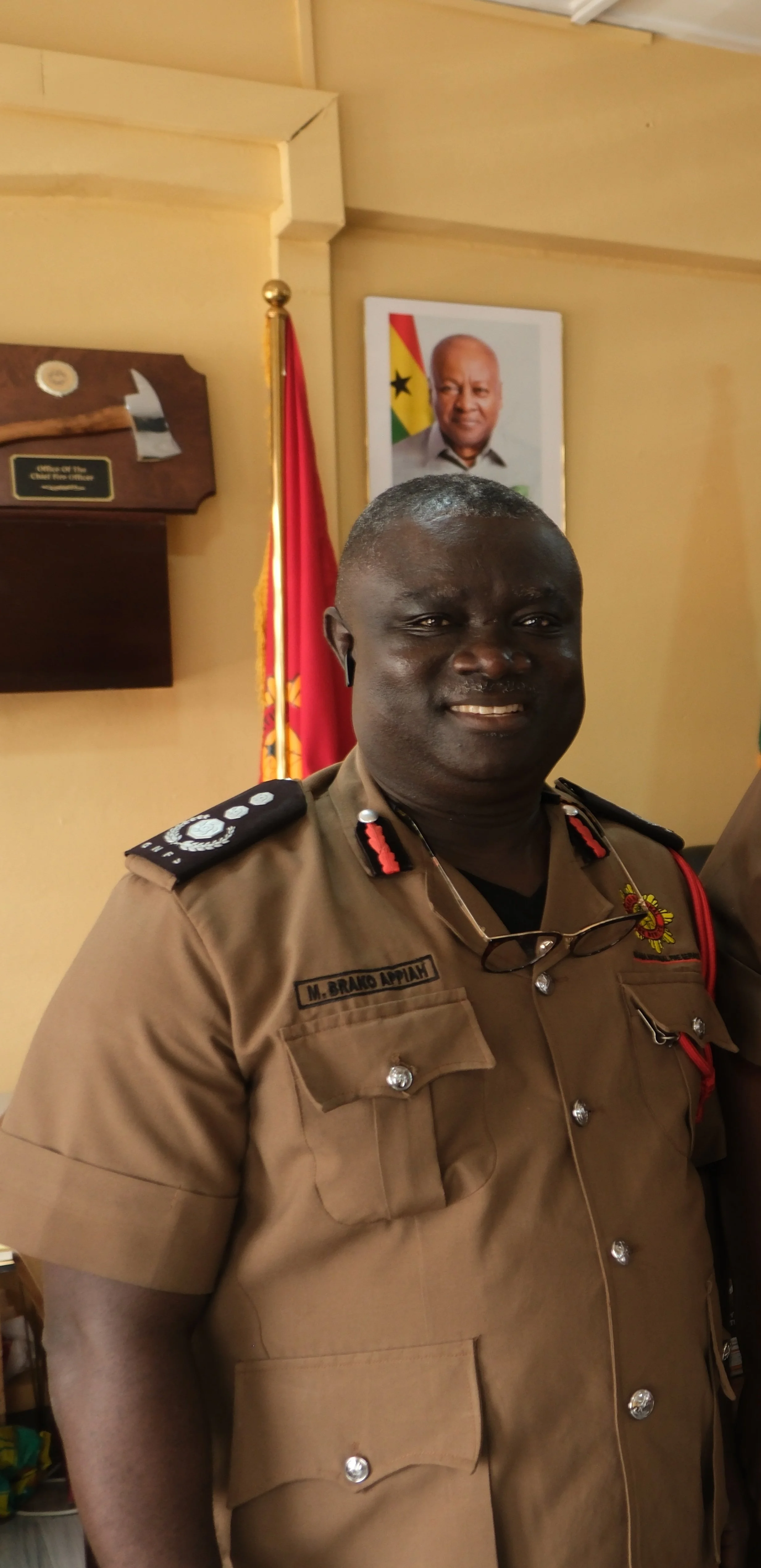
firefighter to firefighter
Mark Brako-Appiah Jnr is Finance Director at the Ghana Fire and Rescue Service. He has been a firefighter for 25 years, and still describes the profession as a calling. His work is guided by the firefighters’ prayer and a responsibility to protect lives and property.
People often assume firefighting depends on strength and fitness. Mark sees it differently. The skills that matter are sympathy, gallantry, bravery and observation. In his words, “You don’t choose a calling. You answer it.
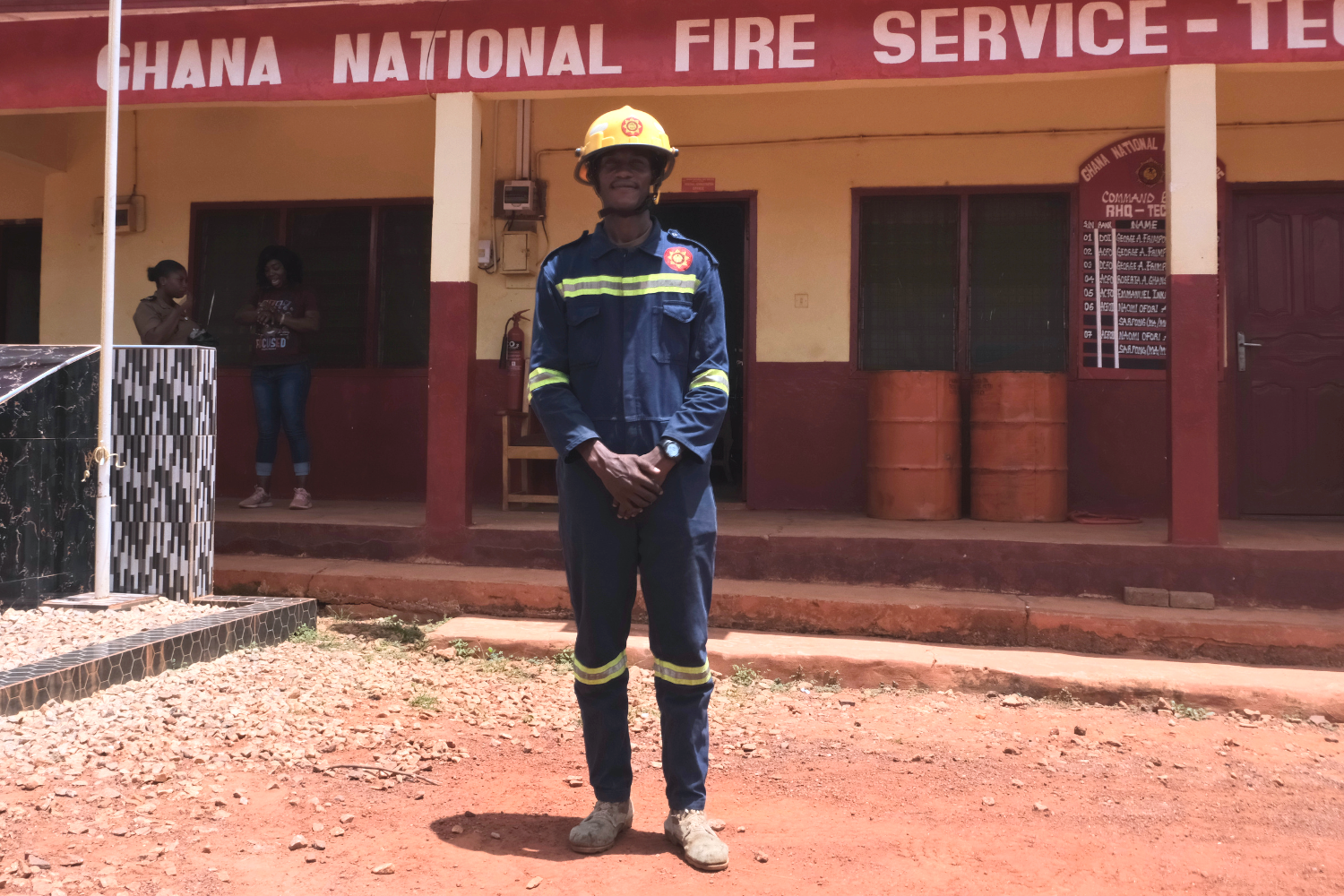
Help close the fire gap
Firefighters cannot protect their communities without the right equipment, training and support. Your donation helps move life-saving resources from where they are no longer needed to where they can save lives.
"This initiative is a testament to our leadership’s commitment to innovation, sustainability, and global solidarity. By joining forces, we enhance firefighting capabilities and foster resilience. As we protect lives, we uphold a commitment to a sustainable future."
- Lt. Col. Essa Almutawa
A message from Dubai Civil Defence
in their words
“We have only one tender and then the RRV in addition, and we serve a larger jurisdiction. So in case we are on a different incident and another call comes... when we get there, they tell us that we've kept too long to be there.”
- Joseph Darko, Sub-Officer Joseph Darko Ghana National Fire Service
“This vehicle, built for rough terrain, will greatly improve our response times.”
- Rev. ACFO Naomi Ofori Adubea Sarpong Techiman Fire Commander, Ghana National Fire Service
“When we first came over, we were trying to teach them how to do it our way. We very quickly had to recognise it was about helping them do it their way”
- Rob MacDougall, Chief Fire Officer, Oxfordshire Fire & Rescue Service and FIRE AID Volunteer
ghana NEWS
Be part of the network
Every project is built through collaboration. Whether you represent a fire and rescue service, a company or simply want to support our work, there are many ways to help strengthen fire and rescue capability around the world.
aBout the data
Figures on this page are drawn from FIRE AID operational records, project reports and visits, and information provided by the Ghana National Fire Service. Data reflect the reporting period stated and equipment totals are recorded at the point of transfer.